Music Education Articles
Gear Reviews

Shure MV7i Review for Music Learners and Home Recording
A research-based Shure MV7i review covering its extra recording input, monitoring, music-processing cautions, and public owner experiences. Compare practical setup needs, documented features, tradeoffs, and carefully attributed owner experi

beyerdynamic DT 770 PRO X Review for Home Recording and Practice
A research-based review of the standard DT 770 PRO X, covering comfort, sound, owner feedback, and the differences from the Limited Edition. Compare practical setup needs, documented features, tradeoffs, and carefully attributed owner exper

SSL 2 MKII review for a straightforward home recording setup
A research-based look at the SSL 2 MKII, including shared headphone controls, 32-bit conversion, public owner feedback, and practical buying checks. Compare practical setup needs, documented features, tradeoffs, and carefully attributed own

Korg microKORG2 review for learners exploring sound design
A research-based microKORG2 review covering visual editing, Version 2 features, voice limits, vocal processing, and clearly attributed owner feedback. Compare practical setup needs, documented features, tradeoffs, and carefully attributed o

Dreadbox Artemis review with current features and owner cautions
A research-based review of the six-voice Dreadbox Artemis, its 2026 firmware changes, expressive control, and public reports worth checking before buying. Compare practical setup needs, documented features, tradeoffs, and carefully attribut

Audient iD48 Review: An Interface for a Growing Recording Studio
Explore the Audient iD48 inputs, switchable inserts, monitoring, expansion limits, and public owner reports before building a larger recording setup. Compare practical setup needs, documented features, tradeoffs, and carefully attributed ow

Novation Launchkey 49 Mk4 Review: Keys, Pads, and a Practical Learning Workflow
A research-based Launchkey 49 Mk4 review explaining its keys, pads, creative tools, DAW integration, and what public owner reports can and cannot show. Compare practical setup needs, documented features, tradeoffs, and carefully attributed

Arturia KeyLab 49 mk3 Review: Learning to Play and Produce Together
A research-based review of the regular Arturia KeyLab 49 mk3, including aftertouch, software integration, public owner feedback, and student suitability. Compare practical setup needs, documented features, tradeoffs, and carefully attribute

Nord Piano 6 Review: A Stage Piano for the Advancing Player
A research-based Nord Piano 6 review for advancing students, with stage workflow, action and pedal considerations, owner feedback, and setup costs. Compare practical setup needs, documented features, tradeoffs, and carefully attributed owne

Kawai ES60 Review: A Focused First Piano With Practical Tradeoffs
A research-based Kawai ES60 review for piano students, covering weighted keys, speakers, pedal options, owner feedback, and practical buying checks. Compare practical setup needs, documented features, tradeoffs, and carefully attributed own
Music Theory

Music Theory for Singers: What You Actually Need, and What Can Wait
The theory a singer uses, worked on one original vocal line: read the clef, lyrics, hyphens, melismas and ties; count pickups and held notes; sing the line on scale degrees and movable-do syllables; check its range against yours and transpo

How to Harmonize a Melody: Choosing Chords Step by Step
Put chords under a major-key tune in eight steps: find the key, mark the notes on beats 1 and 3, list the chords that contain them, plan the cadences first, choose a harmonic rhythm, let passing and neighbor tones be visitors, add color wit

How to Read the Treble Clef: Note Names, Ledger Lines and Fast Reading
The treble clef curls around one line and names it G4; every other note follows from there. Learn the line notes E G B D F and the spaces F A C E, the full map from middle C to C6, ledger lines down to the violin's G3, three anchor notes fo

Riffs, Licks and Motifs: What's the Difference?
A riff holds a song up, a lick is a stock phrase a soloist carries, and a motif is the seed a piece grows from. This guide defines each with its nuances, shows how they work in rock, blues, jazz and classical music, gives original notated e
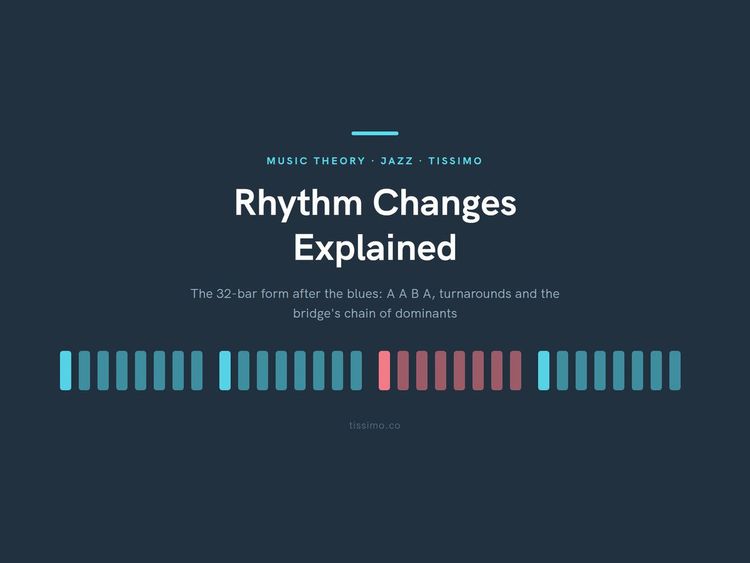
Rhythm Changes Explained: Jazz's Most-Used Form After the Blues
Rhythm changes is the 32-bar AABA chord form built on Gershwin's "I Got Rhythm" (1930), and one of the most-played forms in jazz. See the B♭ A-section turnarounds, the bridge's chain of dominants, common simplifications and substitutions, g

The I–vi–ii–V Turnaround Explained (and Its Common Variations)
What a turnaround does at the end of a section, and how to play the I–vi–ii–V on piano: C–Am–Dm–G7 with smooth guide-tone voice leading, the dominant-chain version, tritone substitution, the iii–VI–ii–V start, its link to the doo-wop I–vi–I

Intervals on the Guitar Fretboard: Shapes You Can See and Hear
Learn to see musical intervals as shapes on the guitar neck. Frets are semitones; neighboring strings give you minor and major 3rds, 4ths, 5ths and octaves; the G–B string pair shifts everything one fret. Then use the shapes to find notes,

Arpeggios Explained: What They Are and How to Practice Them on Any Instrument
An arpeggio is a chord played one note at a time. Learn how to build major, minor and dominant 7th arpeggios by counting half steps, where to start with inversions, how arpeggios work as accompaniment and melody, how to practice them on pia

Chord Progressions in Minor Keys: i–iv–V, the Raised Seventh and Common Patterns
The chords of the natural minor scale, why V uses the raised seventh from harmonic minor, and four common minor-key progressions (i–iv–V–i, i–VI–III–VII, the Andalusian i–VII–VI–V and i–iv–VII–III) written out in A minor and E minor. Includ

The Dominant Seventh Chord Explained: Why V7 Wants to Go Home
Build the dominant seventh chord from a major triad and a minor 7th, find the tritone hidden inside it, and see exactly how V7 resolves: the 7th steps down, the leading tone steps up. Covers V7 in major and minor keys, the three inversions

Walking Bass Lines Explained: How to Build One, Beat by Beat
What a walking bass line is and how to build one: quarter-note pulse, chord roots on beat 1, chord tones on beats 2 and 3, and chromatic, scale and dominant approach notes on beat 4. Original bass-clef examples over a 12-bar blues in F and
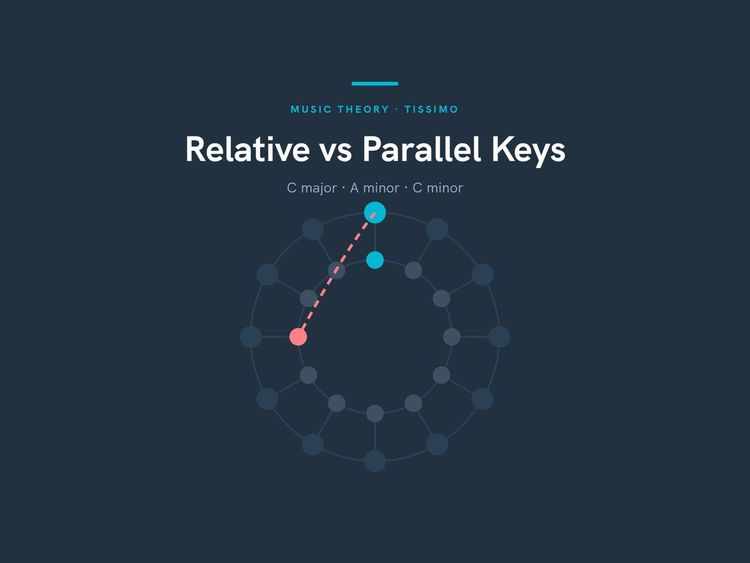
Relative vs Parallel Keys: C Major, A Minor and C Minor Explained
Relative keys share the same notes and key signature but start on different home notes, like C major and A minor. Parallel keys share the same home note but not the notes, like C major and C minor. Learn to find each on the staff, the circl

Pickup Measures (Anacrusis) Explained: How to Count and Play a Piece That Starts Before Beat One
Some pieces start with a short first bar, and it is easy to come in too early, too late, or to count the bars wrong. This lesson explains pickup measures (anacrusis): how to count the missing beats, why the last bar is often short, how bar

How to Read the Alto Clef: The Viola's C Clef Made Simple
A clear guide to the alto clef for beginning violists and anyone who meets it in a score: what a C clef is, how to name every line and space from middle C, where the viola's open strings C3, G3, D4 and A4 are written, which shortcuts from t

The Chromatic Scale and Enharmonic Notes: Why C♯ and D♭ Are the Same Key but Not the Same Note
Learn the twelve semitones, how to write the chromatic scale with sharps going up and flats coming down, and what harmonic and melodic chromatic scales mean. See why E♯, B♯, C♭, double sharps and flats exist, why spelling changes intervals,

How to Start Composing Music: A Beginner's Path From Motif to First Piece
A six-step path for beginners who play a little and want to write their own music: capture ideas, build a motif, shape a phrase and a period, harmonize with I, IV, V and vi, choose an A B A form, then arrange and notate it. Original notated

Melodic Dictation: How to Write Down a Melody You Hear
A step-by-step method for melodic dictation: listen whole, fix the meter and tonic, write the rhythm first, trace the contour in scale degrees, anchor on tonic and dominant, fill the gaps and check. Includes three graded examples (stepwise,

What Is a Motif? Motifs, Phrases, and How Composers Build Music
A motif is the smallest musical idea with its own identity — a short pitch-and-rhythm cell that a composer repeats, sequences, inverts, and fragments to build an entire piece. This guide explains what a motif is, how it grows into a phrase
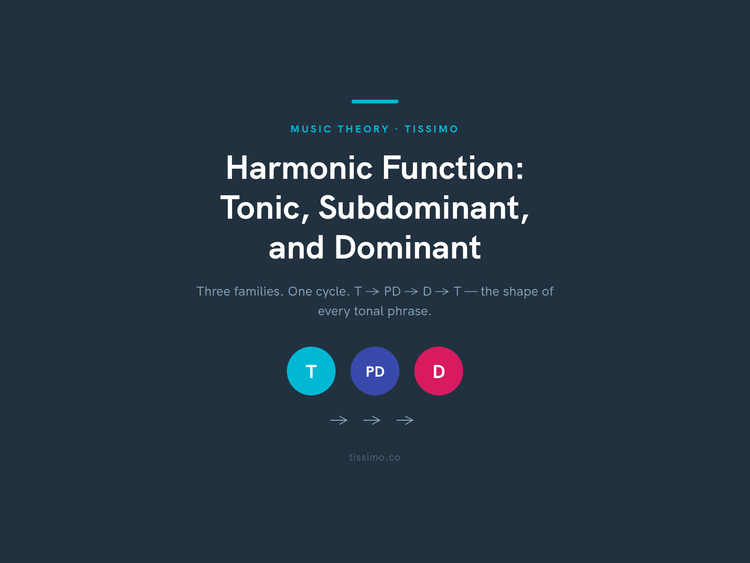
Harmonic Function Explained: Tonic, Subdominant, and Dominant
Harmonic function groups every chord into one of three families — tonic (home), subdominant/predominant (away), and dominant (tension) — and explains why the cycle T→PD→D→T feels inevitable, why V7→I is the strongest resolution, what a dece

Musical Texture Explained: Monophony, Homophony, Polyphony, and Heterophony
Musical texture describes how many melodic lines a piece has and what each one does. This guide covers all four textures — monophony (a single line), homophony (melody plus support), polyphony (independent lines), and heterophony (simultane

How a Piano Works: Hammers, Strings, Soundboard, and Pedals
A step-by-step guide to the piano's mechanism: how the action lever, escapement, and felt hammer throw the hammer at the string; how string length, tension, and mass set the pitch; how the soundboard amplifies it; and what each of the three

Musical Symbols Explained: A Visual Glossary of Common Notation
A category-by-category visual glossary of the symbols on every sheet of music: clefs, note values, rests, time and key signatures, accidentals, dynamics, articulation, tempo and repeat signs, ornaments, and octave/pedal marks — each with a

Perfect Pitch vs Relative Pitch Explained: What They Are and Which One to Train
Perfect pitch (absolute pitch) is the rare ability to name a note without a reference. Relative pitch is hearing every note in relation to a home note — and it is the skill that musicians actually rely on. This guide explains what each abil

Chord Voicings Explained: Close, Open, Drop-2, Drop-3, and Shell Voicings
A voicing is the specific vertical arrangement of a chord's notes — which octave they sit in, in what order, with what spacing. This lesson covers close voicings (all notes within one octave), open voicings, the drop-2 and drop-3 transforma

Voice Leading Explained: Smooth Connections Between Chords
Voice leading describes how individual voices move from one chord to the next. This guide covers the three core principles (keep common tones, move by step, resolve tendency tones), the classic prohibitions (no parallel fifths or octaves, n
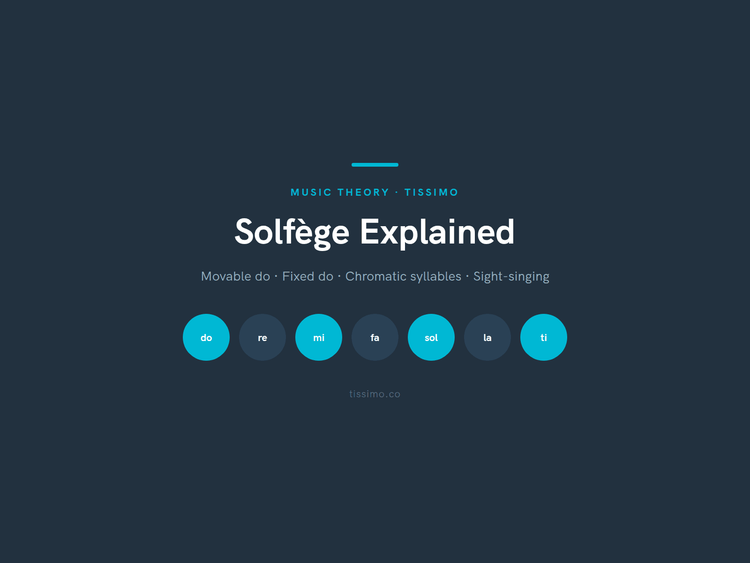
Solfège Explained: Movable Do, Fixed Do, and How to Use It to Sight-Sing
Solfège gives every note a singing name. This guide explains the two systems (movable do and fixed do), who uses each, how the chromatic and minor syllables work, what the Curwen hand signs are, and how to apply movable do to sight-sing a m

Non-Chord Tones Explained: Passing, Neighbor, Suspension, and More
A non-chord tone is a melody note that does not belong to the underlying chord. This guide names every type — passing tone, neighbor tone, suspension, retardation, appoggiatura, escape tone, anticipation, pedal point, and changing tones — e
Transposing Instruments Explained: Concert Pitch, B♭/E♭/F Instruments, and How to Read for Them
A transposing instrument sounds a pitch different from what is written. This guide explains concert pitch, why transposing instruments exist, the B♭/E♭/F families, how to work out the written key for any concert-pitch passage, and a step-by

How to Read the Bass Clef: A Beginner's Guide
A complete beginner's guide to the bass clef (F-clef): the two dots and the F3 anchor, line and space note names, mnemonics, SPN octave numbers, ledger lines, middle C, the grand staff, who reads bass clef, and a worked bass-line reading ex
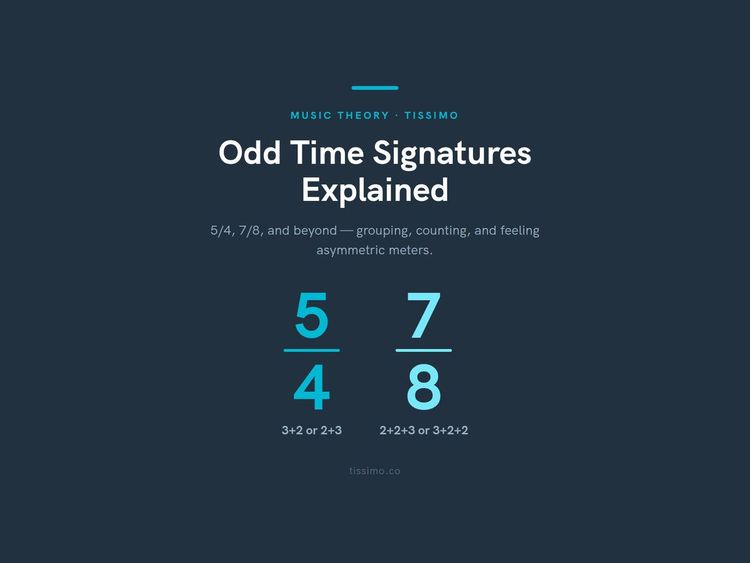
Odd Time Signatures Explained: 5/4, 7/8, and Beyond
Understand odd and asymmetric meters — 5/4, 7/8, 5/8, 9/8 as additive, and 11/8 — through their grouping math: how 5 beats split into 3+2 or 2+3, how 7 eighth notes group as 2+2+3 or 3+2+2, and how to feel, count, and conduct these meters.

Borrowed Chords and Modal Interchange Explained
Modal interchange means borrowing chords from the parallel minor into a major key — using the same tonic but a different mode. This guide shows the five main borrowed chords in C major (iv = Fm, ♭VII = B♭, ♭VI = A♭, ♭III = E♭, ii° = D°) wit

Swing and Shuffle Feel Explained: How Triplet Subdivision Makes Music Groove
Learn how swing and shuffle feel work: swung eighths approximate a 2:1 triplet ratio (long–short), shuffle applies the same triplet continuously, and dotted-eighth-sixteenth is a sharper 3:1 — not the same thing. Covers notation conventions

Augmented and Diminished Chords Explained
Diminished and augmented chords are built from stacked minor or major thirds. This guide covers all four types — the diminished triad, diminished seventh, half-diminished seventh, and augmented triad — with note spellings across multiple ro

Harmonic and Melodic Minor Scales Explained: Why Minor Has Three Forms
Natural minor has no leading tone — so composers raised the 7th to create harmonic minor, and raised the 6th and 7th together to get melodic minor. This guide explains all three forms, the diatonic chords of harmonic minor (including the ma
The ii–V–I Progression Explained: The Heart of Jazz Harmony
The ii–V–I is the core progression of jazz: a minor seventh chord (Dm7), a dominant seventh (G7) and a major seventh on the tonic (Cmaj7), linked by circle-of-fifths root motion and the tritone's half-step resolutions. This lesson covers ch
Chord Inversions Explained: Root Position, First and Second Inversion, and Slash Chords
A chord inversion is about which note sits in the bass. This lesson defines root position, first inversion and second inversion for triads (5/3, 6, 6/4) and seventh chords (7, 6/5, 4/3, 4/2), explains slash-chord notation (C/E vs C/D), and

The Nashville Number System: Chord Shorthand Every Session Musician Knows
The Nashville Number System replaces chord names with scale-degree numbers so the same chart works in any key. Learn where it came from, how the numbers map to chords, what the notation marks mean (diamonds, splits, pushes, inversions), and

Secondary Dominants Explained: Tonicizing Chords Other Than the Tonic
A secondary dominant is a dominant chord built to target any diatonic chord other than the tonic, using the notation V/x. This guide shows how to build every secondary dominant in C major — V/V, V/vi, V/ii, V/IV, V/iii — with correct chord
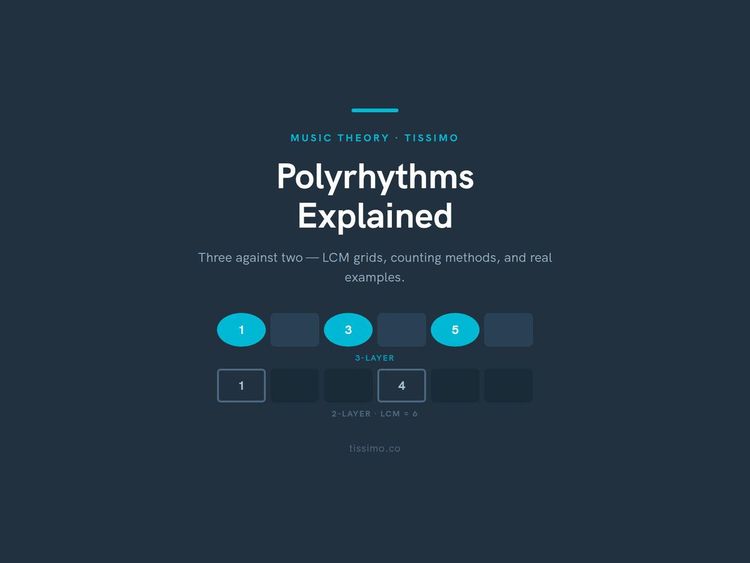
Polyrhythms Explained: Three Against Two and Beyond
Understand polyrhythm — two conflicting pulse groupings sounding at once — starting with 3:2 (the hemiola), through 4:3 and 5:4. Learn the LCM subdivision method, how to count and practice each ratio, how polyrhythm differs from polymeter a

The Blues Scale Explained: Minor Pentatonic Plus the Blue Note
What the blues scale is and why it sounds the way it does. Covers the minor blues scale (minor pentatonic + ♭5), the A and C minor blues scales, the major blues scale, the tritone blue note, and how to improvise with licks and bends over a

The Tritone Explained: Music's Most Unstable Interval
The tritone is exactly halfway through the octave — six semitones, three whole tones. This guide explains why it sounds so tense, how it drives the dominant-seventh cadence, its role in jazz tritone substitution, symmetrical chords and the
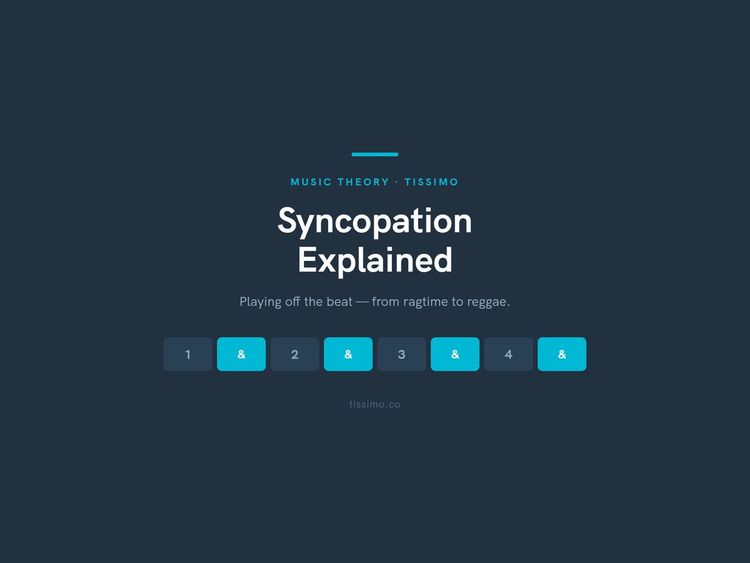
Syncopation Explained: Playing Off the Beat
Understand syncopation — emphasis placed on normally-weak beats and off-beats — with clear counting, notation examples, and genre applications from ragtime to reggae. Learn the four mechanisms (off-beat accent, tie across the beat, rest on

Suspended Chords: Sus2 and Sus4 Explained
Learn what suspended chords are and how to use them. Covers sus2 and sus4 spelling, the relationship between Csus2 and Gsus4, classic sus4-to-major resolution, 7sus4 as a dominant, the contrast with add2/add9 chords, and idiomatic piano and

Roman Numeral Analysis and Figured Bass Explained
Two systems, one harmonic grammar: Roman numerals name each chord by its scale step and quality (I, ii, V7), while figured bass gives the intervals above the bass note (6, 6/4, 7). This lesson shows how to analyze a chord in four steps, lab

Counterpoint Explained: Two Voices, Each Worth Listening To
Counterpoint combines two or more independent melodic lines — not melody plus accompaniment, but two full melodies that each make sense on their own. This guide covers consonance and dissonance, the four motion types (parallel, similar, con

Ornaments in Music: Trills, Mordents, Turns, and Grace Notes Explained
Learn what every common ornament sign means and how to play it. Covers grace notes (acciaccatura and appoggiatura), the trill, the lower and upper mordent, the turn, and how realization changes from Baroque to Romantic. Original notation ex
Modulation Explained: How Music Changes Key
Modulation moves a piece from one home key to another — and knowing how it works changes how you hear music. This guide covers what modulation is (and how it differs from a brief tonicization), why composers use it, the most common destinat
Consonance and Dissonance Explained: Tension, Stability and Why Intervals Feel the Way They Do
Consonance and dissonance run on a spectrum, not a switch. This guide covers the physics of frequency ratios, the full interval hierarchy from perfect consonances to sharp dissonances, the contested status of the perfect fourth, how the dom

Instruments of the Orchestra: The Four Families Explained
The symphony orchestra groups its instruments into four families: strings, woodwinds, brass, and percussion. This guide covers every section's members, how each instrument makes sound, approximate ranges, transposing instruments and concert

Major vs Minor: The Difference and How to Hear It
Learn the difference between major and minor from the ground up. This guide covers the major third vs minor third (4 vs 3 semitones), major and natural minor scales (W-W-H and W-H-W-W-H patterns), major and minor triads, the three minor sca
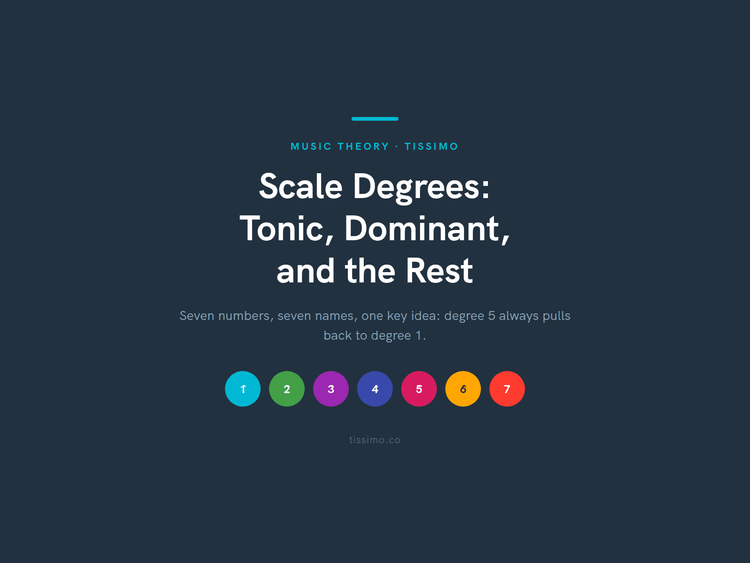
Scale Degrees Explained: Tonic, Dominant, and the Rest
Every note of a major scale has a number (1̂–7̂), a name (tonic through leading tone), and a function. This guide explains all seven scale degrees, where their names come from, which are stable and which are active tendency tones, how they

The Harmonic Series and Why Instruments Sound Different
Every instrument produces a stack of frequencies called the harmonic series — integer multiples of a fundamental. This guide explains what overtones are, where the octave, fifth, fourth, and major third come from (frequency ratios 2:1, 3:2,

How to Find the Key of a Song: Key Signatures, Tonic, Chords and Your Ear
Learn five practical methods to identify the key of any song: read the key signature and name both the major and relative minor it describes, listen for the tonic — the note the melody resolves to — confirm it with the final chord and the V

Voice Types and How to Find Your Vocal Range
Learn what soprano, mezzo-soprano, contralto, tenor, baritone and bass mean, what tessitura and passaggio are, and how to find your own comfortable vocal range step by step using a piano or tuner app — with guidance on when to work with a s

How to Write a Melody: A Step-by-Step Guide for Beginners
Learn how to write a melody from scratch. This guide covers the motif, phrase structure (antecedent and consequent), melodic contour, landing on chord tones, rhythm and rests, and six common beginner pitfalls — with engraved notation exampl

How to Read a Lead Sheet: Melody, Chord Symbols, and Making Music from the Page
A lead sheet gives you a melody line and chord symbols — the left hand is your job. This guide teaches you to decode every common symbol (C, Cm, C7, Cmaj7, Csus4, C/E, C°, C+), realize a progression step by step, choose left-hand patterns,

The Pentatonic Scale Explained: Major, Minor, and Blues
What the pentatonic scale is, where it comes from, and how to play it. Covers the major pentatonic (1 2 3 5 6), the minor pentatonic (1 ♭3 4 5 ♭7), and the blues scale (minor pentatonic + ♭5), with engraved examples, the black-key shortcut,

How to Improvise Music: A Beginner's Guide
Learn how to improvise music from scratch. This guide covers the minor pentatonic and blues scale, call and response, motif development, target tones, tension and release, and a step-by-step first improvisation practice — all with notation

Ear Training for Beginners: How to Develop Your Musical Ear
Ear training is the practice of teaching your brain to understand what it hears — before reading a note or touching an instrument. This guide covers the core skills in a sensible order: interval recognition with reference songs, solfège and
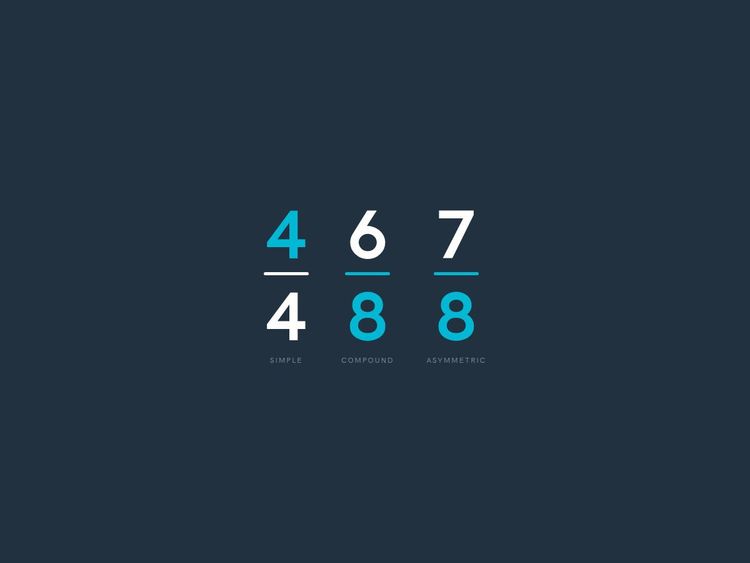
Time Signatures Explained: Simple, Compound, and Odd Meters
Learn to read every time signature: how the top and bottom numbers work, how to count simple meters (4/4, 3/4, 2/4, cut time), compound meters (6/8, 9/8, 12/8), and odd asymmetric meters (5/4, 7/8). Includes engraved examples, beaming rules

Key Signatures Explained: Sharps, Flats, and How to Read Them
What a key signature is, why both sharps and flats exist, the exact order they appear on the staff (F C G D A E B for sharps; B E A D G C F for flats), two quick tricks to name any major key in seconds, the full table of all 15 major key si

Musical Terms and Markings: Tempo, Dynamics, and Articulation Explained
A plain-language reference for the marks on every piece of sheet music: the six dynamic levels pp to ff, hairpins, sforzando and fp, all six Italian tempo words with approximate BPM ranges, rit./a tempo/accel./rubato, plus the articulation
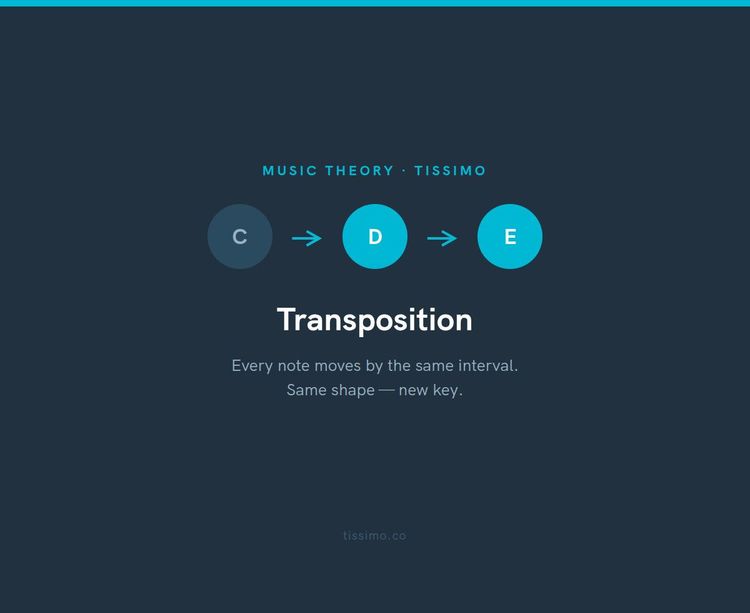
Transposition Explained: How and Why to Change Key
Transposition shifts every note by the same interval, preserving the interval pattern and rhythm at a new pitch level. Learn interval and scale-degree methods, chromatic-note spelling, written versus concert pitch for specific instruments,

How to Read Sheet Music: A Beginner's Step-by-Step Path
A complete beginner's guide to reading sheet music: the five-line staff, treble and bass clefs, note names and ledger lines, note values and rests, time signatures and barlines, sharps and flats, key signatures, and a first melody — plus a

Musical Form: How Composers Shape a Piece with Binary, Ternary, Rondo, and Sonata
Learn how composers map a piece from beginning to end using motifs, phrases, and sections. This guide covers binary, rounded binary, ternary, rondo, theme and variations, and sonata form — with block diagrams for each, real examples by name

The Seven Modes Explained: From the Major Scale to Dorian, Lydian, and Beyond
Every mode is the major scale started from a different note — or, more usefully, a major or minor scale with one note changed. This guide covers all seven modes (Ionian, Dorian, Phrygian, Lydian, Mixolydian, Aeolian, Locrian) with their ste

Cadences Explained: Perfect, Plagal, Half, and Deceptive
Learn the four types of cadence — perfect authentic, plagal, half, and deceptive — with engraved examples in C major and A minor. Covers how each cadence sounds, why the perfect cadence needs root position and the tonic in the soprano, how

Extended Chords: How to Build and Read Ninths, Elevenths, and Thirteenths
Learn how to build extended chords by stacking thirds past the seventh. This guide covers the dominant ninth, major ninth, and minor ninth — C9, Cmaj9, and Cm9 — then the eleventh and thirteenth, the add9 distinction, which tones are common

Symmetric Scales: Build Whole-Tone and Half-Whole Collections from Any Pitch
Learn to construct the whole-tone and octatonic (half-whole) collections by repeating a single step pattern. Discover why only two whole-tone sets and three octatonic sets exist under transposition, practice checking note membership, and ex

Build a Musical Sentence: Present, Repeat, Continue
Turn a two-bar idea into an original eight-bar musical sentence. Follow a complete C-major example through repetition, shorter fragments, changing harmony, and an authentic cadence, then compare its presentation and continuation with a ques

First-Species Counterpoint: Write an Independent Upper Line
Compose an eight-bar upper melody against a fixed C-major cantus, one whole note at a time. Learn to screen consonant intervals, shape a separate high point, inspect motion into perfect fifths and octaves, and close by contrary steps. Origi
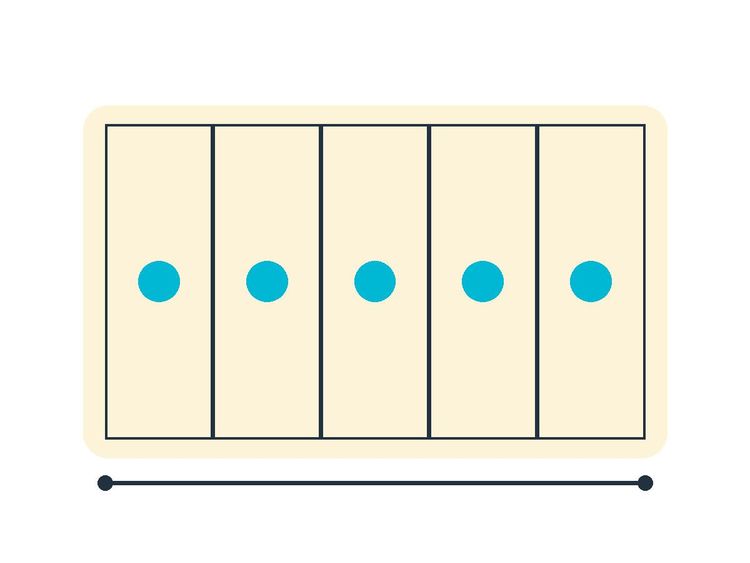
Quintuplets: Fit Five Even Notes into One Beat
Keep a steady quarter-note pulse while moving from four notes per beat to five and six. Read the quintuplet bracket, compare exact timing grids, and clap an original two-bar 4/4 line. Simple transition drills help you check even spacing and

Hear a Suspension: Hold the Note, Find the Resolution
Follow two exposed voices to hear a prepared 4–3 suspension: a stable note, a bass change beneath it, and a delayed downward step. Compare immediate arrivals, held notes, fresh attacks, and a clear appoggiatura, then mark the resolution bea

Hear When the Chord Changes: Harmonic Rhythm by Ear
Keep counting four beats while the accompaniment gets busy. Work through original C, F, and G examples to separate chord changes from repeated attacks, broken chords, and moving bass notes. Compare one chord per bar with two at the same tem

One Home Note, Two Scale Colors: Hear Dorian and Mixolydian
Practice hearing the sixth or seventh that changes a familiar scale into a mode. Compare major with Mixolydian and natural minor with Dorian through matched scales and short melodies, then try G and D as new home notes. Learn how to keep th

How to Compose a Graphic Sound Score Another Player Can Read
A step-by-step guide to composing a 24-second graphic sound score: choose three everyday sounds, invent one symbol for each, place events in six four-second windows, reserve one silent window, hand the score and legend to a partner, and rev
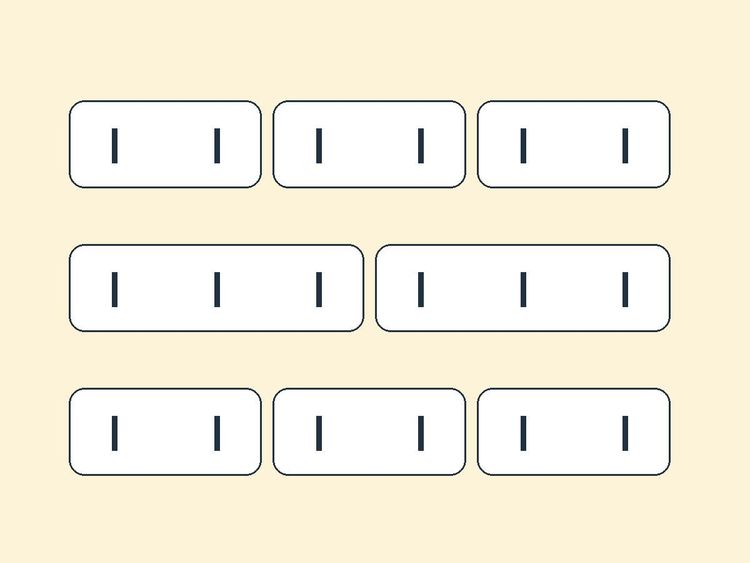
Changing Time Signatures: Keep the Eighths Even
Cross from 3/4 to 2/4 and 6/8 without losing the next downbeat. Follow original rhythms, shared eighth-note timelines, and a six-bar clapping practice under an explicit eighth=eighth instruction. Compare quarter and dotted-quarter beat rate

How to Follow an Ensemble Score: One Moment, Three Parts
Learn to navigate a small ensemble score, align notes that sound together, and follow a melody as it moves between flute, violin and cello. Original concert-pitch examples show how systems, beats and extracted parts connect, with worked ans

Hear Tuning Beats: Match a Note to a Reference
Two nearly matching notes can make a pulsing sound when they overlap. Learn to compare zero, one and three beats per second, test a small change against a fixed reference, and explain why beat speed alone cannot tell you sharp from flat. Or
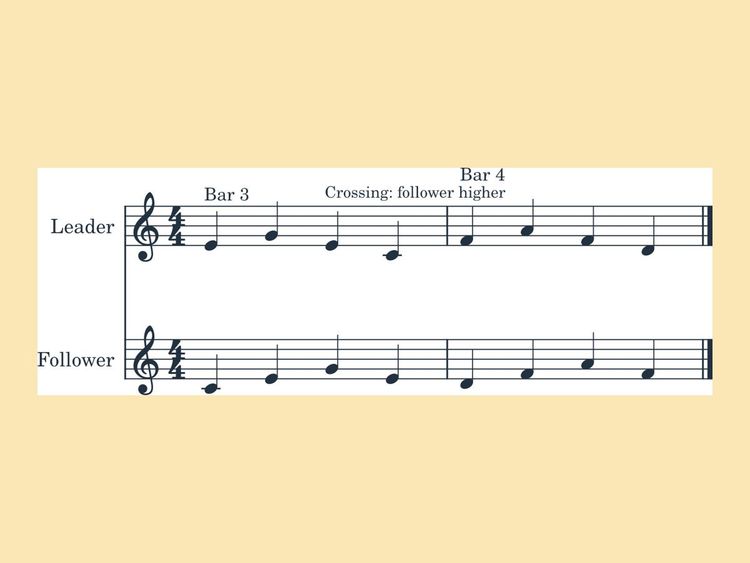
Write a Two-Voice Canon: Make One Melody Follow Itself
Learn to construct a finite two-voice canon step by step: compose a four-bar leader melody, shift it exactly eight beats to create the follower, hear the overlap, and revise unwanted clashes without breaking the imitation. Includes two free

Hear Chord Inversions: Separate the Bass from the Root
Learn to follow the lowest note of a named triad, match it to the root, third or fifth, and identify its inversion. Original C-major, F-major and A-minor examples move from isolated bass references to hidden listening trials and a four-bar

Movable-Do Solfège: Sing a New Melody Before You Play It
Learn to find do in C, G and F major, label the first five scale degrees, and sing a short melody from a tonic reference before hearing its model. Original notation walks you through rhythm, steps, thirds and transposition, with a first-rea

Cello Clef Changes: Keep the Same Pitch in Bass and Tenor
Learn to carry the same sounding pitch through bass and tenor clef changes. Start with middle C, compare original phrases, preserve octave and key-signature details, and follow an eight-bar cello reading. Clear notation, practical checks, a

How to Read Guitar TAB: Match Strings, Frets and Rhythm
Turn six-line guitar TAB into a phrase you can actually play. Learn the string order, open-string zeros, fret numbers, stacked notes and the guitar’s written octave, then connect each location with the rhythm on its aligned staff. Six origi

Music Theory for Producers: Turn a Chord Loop into Basslines and Arpeggios
Build an original A-minor sketch from four named chords, then connect its voices, choose an arpeggio order and give the bass a rhythm around the kick. Annotated notation, MIDI-style diagrams and free printable worksheets make each choice vi

Synthesizer Basics: Oscillators, Filters, ADSR and LFOs
Start with one note and learn to control its pitch, brightness, beginning and tail. Follow a basic subtractive sound path, compare waveform ingredients, work out MIDI octaves and draw an amplitude envelope. Original musical examples and fre

Electronic Dance Music Explained: Styles, Beats, Build-Ups and Drops
Learn to hear the pulse, separate musical layers and follow a dance track’s changing sections. Compare house, techno, trance, drum and bass and dubstep, then tap original drum patterns, calculate echo timing and develop a motif into a 64-ba

Music Symbols Explained: Repeats, Octave Signs, Slurs and Ornaments
Decode the everyday marks on a piano score, from clefs, accidentals, rests and signatures to repeat endings, D.S. al Coda and octave brackets. Annotated notation, keyboard and timing maps show how ties, slurs and ornaments become actions. C

Minor Scales Explained: Natural, Harmonic and Melodic Minor at the Piano
Learn to build the three minor forms, compare relative and parallel keys, and hear why a raised seventh changes the dominant chord. Follow clear C-minor examples, try A, D and E minor, then find the changing notes in the Minuet in G minor a

Hip-Hop for Musicians: Where It Came From, Boom-Bap and Trap Beats, Rhyme, Flow and Sampling
From the 1973 Bronx party and Kool Herc's looped break to trap's 808: read, count and program a boom-bap groove and a half-time trap groove in drum notation and 16-step grids, see how swing works, write rhymes in two schemes, rap the same w

How to Write a Country Song: Storytelling, Three Chords, the Nashville Number System and the Boom-Chick
Write a country song the way the tradition does: a story told in concrete details over I, IV and V. Learn where the style came from, read two public-domain gospel songs from 1899 and 1907, one of them the Carter Family's theme song, write a

Song Structure for Beginners: Verse, Chorus, Bridge, AABA and the 12-Bar Blues, and How to Write Your First Song
How songs are built: phrases, sections and the letters that name them, then intro, verse, prechorus, chorus, bridge and outro, and the three big forms, strophic, AABA and verse–chorus, with real examples and a 1908 score that prints the wor

Music Intervals Explained: How to Count, Name and Hear Every Interval from the Half Step to the Octave
Two counts name any interval: count the letters for the number, then count the half steps for the quality. Learn perfect, major, minor, augmented and diminished, why C–F♯ and C–G♭ differ, how to invert an interval with the 9 and 12 rules, w

Music Theory for Beginners: The Six Building Blocks and the Order to Learn Them
Notes, rhythm, scales, intervals, chords and keys: a plain-language tour of the six building blocks of beginner music theory, each with an engraved example, three of them from real music (Mary Had a Little Lamb, Twinkle, Twinkle and Petzold

How to Count Rhythm in Music: Note Values, Rests, Time Signatures, Syncopation and Triplets
Count every common note and rest out loud with one system, the one our Write the counts sheets use: 1 & 2 & for eighths, 1 e & a for sixteenths, 1 trip let for triplets and 1 2 3 4 5 6 in 6/8. With counted, engraved examples of dots and tie

How to Build Piano Chords: Triads, Inversions, Seventh Chords and Chord Symbols
Count half steps, stack 3rds, and a chord symbol becomes a recipe you can build on any root. This lesson builds the major, minor, diminished and augmented triads, names the seven chords of a key with Roman numerals, explains inversions and

The Circle of Fifths Explained at the Piano: Key Signatures, Relative Minors and the Chords That Fit
Build the circle of fifths from a single interval at the keyboard, then put it to work: read any key signature with two quick tricks, find each key's relative minor, see why F♯ major and G♭ major use the same piano keys, and play the chords

From Piano Roll to Staff Notation: A Producer's Guide to Reading Music
If you can read a MIDI clip, you already know the four facts a score writes down. This guide translates each part of a note in Ableton Live, FL Studio and Logic Pro terms: rows into lines and spaces, middle C's three names, grid settings in

The Musical Alphabet: How Seven Letters Name Every Note You Will Ever Play
Seven letters, A to G, name every white key on the piano, and sharps and flats name the black keys. Learn to find each letter from the black-key groups, why E–F and B–C are half steps, why each black key has two names and what C4 means, the

The Major Scale, Step by Step
What makes a step a half step or a whole step, the one order of steps every major scale follows, W-W-H-W-W-W-H, and how that recipe builds G major with F♯, F major with B♭ and any other key on paper. With the numbers and names of the scale

Rhythm vs. Meter: The Difference Every Musician Should Actually Feel
Rhythm is the pattern of long and short notes you play; meter is the steady grid of strong and weak beats you feel under it. See one rhythm in two meters, simple and compound time, hemiola, pickups, syncopation, polyrhythm and polymeter, 5/

Common Chord Progressions in Pop, Rock, Blues, Jazz, and Hip-Hop (With Real Song Examples)
Learn the chord progressions behind pop, doo-wop, blues, rock, jazz and hip-hop at the piano: I–V–vi–IV and its relatives, I–vi–IV–V, the 12-bar form, I–♭VII–IV, the ii–V–I with guide tones, the circle-of-fifths sequence, the Andalusian cad
Instrument Technique

Common Chord Progressions on Guitar: Open Chords, Numbers and the Capo
Play the progressions behind countless songs as open guitar chords: I–IV–V, I–V–vi–IV and vi–IV–I–V, the 1950s I–vi–IV–V loop, ii–V–I and the 12-bar blues, in G, C, D, A and E. Every chord box is checked against two published charts, the ha

Five-Finger Scales on Piano: Positions in C, G, D, A, F and Minor Keys
Learn the five-finger positions most beginner pianists meet first: what a five-finger scale is, how to build any major or minor one from its whole-step and half-step pattern, the exact notes and fingers for both hands in C, G, D, A and F ma

How to Start Learning Oboe: Reeds, Difficulty, Cost and the First Year
An honest guide for teens, adults and parents before the first oboe lesson: what makes the oboe hard (reed, embouchure, air, half-hole and octave keys), how a double reed works and how to soak, store and replace it, plastic versus wood and

How to Play the Recorder: First Notes, Breath and Tonguing for Beginners
A step-by-step start on the soprano recorder: hold it with the left hand on top, use a gentle breath, start each note with "tu," and see how recorder music sounds an octave above the written notes. Add C, D, E and low D to B, A and G with c

The Minor Pentatonic Scale on Guitar: All Five Shapes and How to Connect Them
Play A minor pentatonic in all five shapes, from the familiar box at the 5th fret to fret 17. See where the roots sit in each shape, join neighboring shapes through the notes they share, move the system to G, E or D from a root on string 6

How to Sing in Tune: Pitch-Matching Exercises for Beginners
Research suggests that most off-key singers hear pitch differences well enough; the harder part is turning a heard note into the right sound. Find a comfortable home note, match it against a steady reference, slide into it and hold it, then

Classical Guitar for Beginners: Posture, Nails and First Pieces
Start classical guitar with a sound setup: sit with a footstool or support, name the plucking fingers p, i, m and a, choose between free and rest strokes, decide about nails with your teacher, and read the first eight notes on the guitar st

How to Start Learning Flute: First Sound, First Notes and a Four-Week Plan
Start the flute the way teachers often do: on the headjoint alone. Learn how the air jet makes the sound, how to assemble and line up the flute, the three balance points of a relaxed hold, the fingerings for B, A and G and then C, F, E, D a

How to Start Learning Trumpet: Buzzing, First Notes and a Daily Plan
A beginner's guide to the B-flat trumpet: how lips and valves make the notes, buzzing on the mouthpiece, a firm-corners embouchure with light mouthpiece contact, written C, D, E, F and G with their valves, open C and G and the first lip slu

How to Start Learning Saxophone: Setup, First Notes and a 20-Minute Daily Plan
A first-month guide for alto or tenor saxophone: assemble the horn in the right order, fit the reed and ligature, form an embouchure, play written B, A and G with the left hand, then C, F, E and D, hold long tones, tongue cleanly, use the o

How to Learn Cello as an Adult Beginner: The First Six Months
A practical first-six-months guide for adults starting the cello: why a full-size 4/4 cello is the usual adult choice, how to set the chair and endpin, the basic bow hold, the open strings C2 G2 D3 A3, first-position finger patterns, readin

Singing in a Choir for Beginners: Parts, Reading and Rehearsal
New to choir? Learn what SATB means and how to find your part, how to read a short score and an open score (including the tenor's two clefs and the words under the notes), a five-step way to learn your line at home, how to blend and breathe

Sight-Reading for Guitarists: A Practical Plan
Why guitarists find sight-reading harder than pianists do, and a step-by-step plan to fix it: learn the natural notes in first position (written versus sounding octave), read rhythm separately, play in positions, use tab as a bridge, read c

How to Sing Harmony: A Beginner's Guide
Learn what harmony singing is and how it differs from unison, how to find a note a third above or below a melody, how to use a drone or keyboard to check your pitch, why thirds and sixths blend, and how to hold your own part against the mel
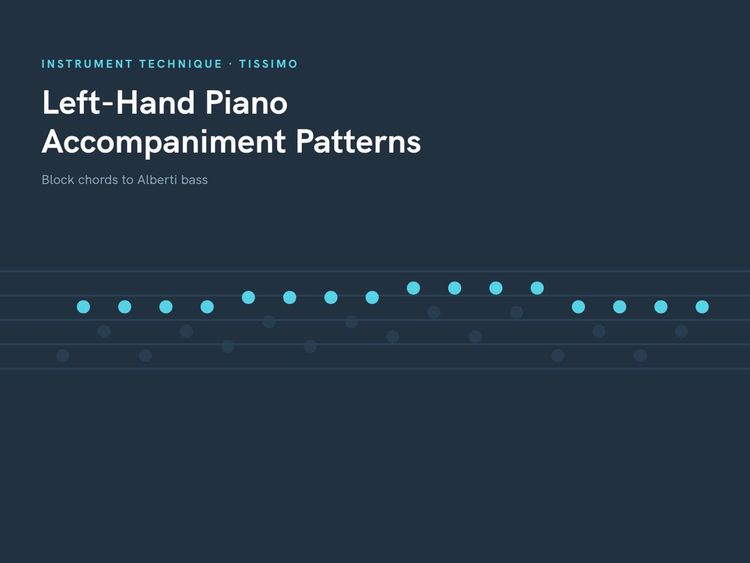
Left-Hand Piano Accompaniment Patterns: From Block Chords to Alberti Bass
Six left-hand piano accompaniment patterns in order of difficulty: block chords, broken chords, root-fifth, Alberti bass, waltz oom-pah-pah and an arpeggiated 1-5-8-10. Each comes with an original four-bar example in C, the style it fits, h

How to Play the Major Scale on Guitar: One-Octave and Two-Octave Shapes
Learn the major scale on guitar with movable shapes: the whole-and-half-step formula, a one-octave pattern with the root on the 6th or 5th string, the two-octave shape in G, one finger per fret, playing in G and C, sequences in thirds and g

The 12-Bar Blues on Guitar: Chords, the Shuffle Rhythm and a First Solo
Learn the 12-bar blues on guitar in the key of E: the I-IV-V form with the quick change and turnaround, open E7, A7 and B7 chords, the boogie shuffle pattern of root, 5th and 6th, the swing feel that makes it roll, the minor pentatonic box,

Electric Guitar for Beginners: The Amp, the Pickups and Your First Riffs
A beginner's guide to electric guitar: how pickups, the selector, volume and tone knobs work, what gain, EQ and master volume do on an amp, clean versus overdrive, and how to practice quietly with a headphone amp. Then three original riffs

How to Learn Drums at Home: From Practice Pad to Drum Kit
A practical beginner's guide to learning drums at home: why to start on a practice pad, matched grip and the fulcrum, stroke heights, singles, doubles and the paradiddle, reading basic drum notation, a first rock beat and fill, setting up a

How to Learn Violin as an Adult Beginner: The First Six Months
A practical first-six-months guide for adults starting violin: choosing and renting a full-size 4/4 instrument, shoulder rest and rosin, holding the violin and bow, the open strings G3, D4, A4 and E5, first finger patterns, tuning with fine

How to Learn Acoustic Guitar: A Beginner's Roadmap for the First Three Months
A 12-week, week-by-week plan for learning acoustic guitar from scratch: tuning and holding the guitar, your first open chords (Em, Am, C, G, D), strumming, chord changes, a first song progression, fingerpicking basics and a preview of capo

Ukulele for Beginners: Tuning, Your First Four Chords, and Strumming
A complete first guide to the ukulele: how the four sizes differ, standard G–C–E–A tuning and why the 4th string is not the lowest, how to hold it, the chord shapes C, Am, F, G and G7 with clear chord boxes, how to change chords smoothly, t

Bass Guitar for Beginners: The Bass Player's Job, Your First Grooves, and What to Practice
Learn what the bass does in a band, how to hold and pluck it, one finger per fret, standard tuning, how to read bass tab and the bass clef, and five original first grooves from roots to a 12-bar blues line. Includes a 20-minute daily practi

Singing Basics: Posture, Breath Support, and Vocal Warm-Ups for Beginners
Good posture and breath support are the foundation of every singing technique — not refinements you add later. Learn how the diaphragm works, what appoggio (breath support) actually means, why 'sing from the diaphragm' is misleading, and ho

Guitar String Bending and Vibrato Explained
String bending pushes a fretted string sideways to raise pitch — half-step (+1 semitone), whole-step (+2), 1½-step (+3). Vibrato is a small, repeated bend held in a steady pulse. This guide covers every bend type, how to bend in tune, pre-b

Alternate Picking and Economy Picking Explained
Alternate picking uses a strict down-up-down-up sequence regardless of string; economy picking continues the same direction at every string change, turning the crossing into a mini-sweep. This guide covers pick-direction notation, the 3-not

Drop D and Alternate Guitar Tunings Explained
Standard tuning is E A D G B E — but thousands of recordings use Drop D, DADGAD, Open D, Open G, Drop C, or E-flat standard to unlock one-finger power chords, open-string resonance, and slide guitar. This guide explains what each tuning is,

The CAGED System Explained: See the Whole Guitar Fretboard
CAGED names the five open-chord shapes every guitarist already knows — C, A, G, E, D — and shows how each one becomes a movable template. Chain all five for one chord and you have covered the entire neck. This guide spells out each shape, s

How to Memorize the Guitar Fretboard: Note Names, Patterns, and a Practice Plan
The guitar fretboard repeats the musical alphabet from open string to fret 12, where every note starts again an octave higher. This guide shows the natural notes on the low E and A strings first, then octave shapes that copy every note two
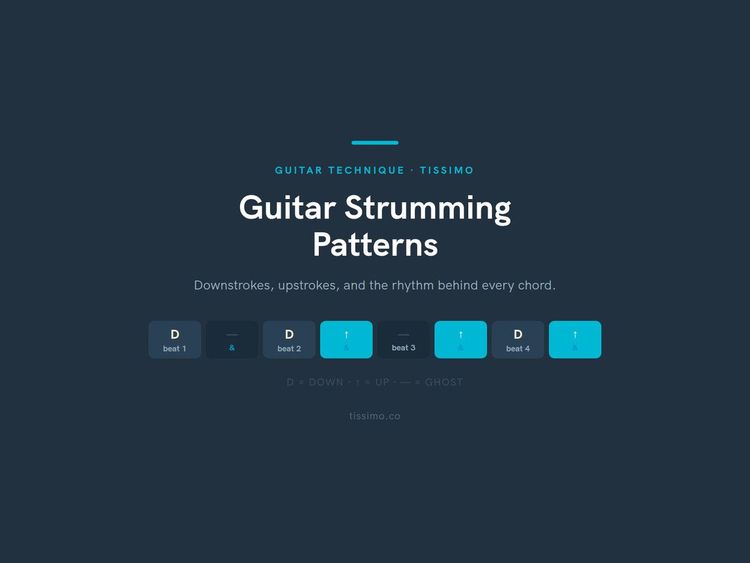
Guitar Strumming Patterns for Beginners: Rhythm, Downstrokes, and Upstrokes
Strumming is a rhythmic skill: the hand moves in a steady eighth-note pendulum and you decide which strokes hit the strings. This guide covers downstroke-only patterns, full down-up eighths, the most common pop/folk pattern (D - DU -UDU), 3
Fingerpicking for Beginners: Basic Patterns and How to Start
Fingerpicking uses the right-hand fingers PIMA (thumb, index, middle, ring) to pluck individual strings instead of strumming. This guide covers hand position, rest and free stroke, the standard bass-string assignment for the thumb, and five

How to Read Guitar Chord Diagrams: A Beginner's Guide
A chord diagram — also called a chord box — is a grid showing the first few frets of the guitar neck. Vertical lines are strings, horizontal lines are frets, the thick top line is the nut, dots are where to press, O means open, X means mute

Barre Chords Explained: How to Play Them and Why They Are Worth the Struggle
A barre chord uses one finger across all six strings to act as a movable nut, so a single E-shape or A-shape can produce any of the 12 major or minor chords just by sliding up the neck. This guide covers the two main families, correct finge

The Capo Explained: What It Does and How to Use It
A capo clamps all six strings at one fret, raising every open string by that many semitones so familiar chord shapes ring out at a higher pitch. This guide explains the shape-versus-sounding-chord difference with a full position table, show

How to Read Guitar Tabs: A Beginner's Guide
Guitar tab uses six horizontal lines for the six strings — low E at the bottom, high e at the top — and numbers for frets, 0 for open. This guide covers string orientation, fret numbers, chord tab, rhythm limitations, and every articulation

How to Read Drum Notation: A Beginner's Guide
Learn to read drum notation from the ground up: the percussion clef, where each voice sits on the drum staff, normal versus x noteheads, stem direction for hands and feet, counting eighth and sixteenth notes, the standard rock beat (kick 1

How to Tune Your Instrument: A Beginner's Complete Guide
Learn how to tune any instrument from scratch: why instruments drift out of tune, how to use a clip-on tuner or app, how to tune by ear using the beats technique, step-by-step methods for guitar (standard EADGBE, the 5th-fret method), violi

Guitar Power Chords: The Movable Root–Fifth Shape
Learn how to build a guitar power chord from just two notes — the root and the perfect fifth — and move the same shape to every root on strings 6 and 5. This guide shows the two-note and three-note forms in notation and fretboard diagrams,

Classical Guitar Free and Rest Strokes: Keep the Neighbor Ringing
Learn to distinguish a free stroke that clears the neighboring string from a rest stroke that lands on it. Compare the same open high E with both, then preserve a B that must keep ringing below. Original notation, string-path diagrams and f

Violin Martelé: A Clear Start and an On-String Stop
Learn to hear a prepared martelé beginning, release into the stroke and stop the bow on the string. This teacher-led violin lesson uses open D, original notation and clear contact-state diagrams to separate start quality from note length, b

Two-Mallet Marimba: Give Both Notes One Start
Prepare two marimba bars before you strike, hear each target, and coordinate a shared beginning with one mallet in each hand. Original examples show how to separate correct notes from togetherness, hear a spread attack, and use rests to pre

Three Open Strings, One Ringing Chord: Your First Campanella on High-G Ukulele
Play E4–G4–A4 two different ways on a high-G ukulele: Route A on one string where each note stops the last, and Route B on three separate open strings where the notes overlap and ring together. Learn why that overlap is called campanella, h

Piano Sostenuto Pedal: Capture One Note Before Playing the Rest Short
The sostenuto (middle) pedal captures only the keys held when it goes down — keys pressed afterward stay short. Learn to hold the bass note first, capture it with the pedal, play later short notes freely, and release at the phrase boundary.

First Snare Brushes: How to Sustain a Sweep Instead of Repeated Hits
Learn what makes a brush sweep different from a tap, and how to keep wire brushes in continuous contact with a coated snare head for a full bar. Covers equipment checks, reading whole notes and rests in brush notation, the first four-beat s

How to Slide on Guitar: Connect G4 and A4 With One Finger and One Pluck
Learn how a guitar slide differs from a hammer-on and a bend. This step-by-step guide walks you through connecting G4 (fret 3) and A4 (fret 5) on string 1 with a single pick stroke and one finger that never leaves the string, with notation,

Snare Open Rolls: Control Exactly Two Contacts per Hand
An open roll is a measured RRLL double-stroke roll: each hand makes exactly two contacts before switching. Learn to hear discrete doubles versus buzz clusters, let your teacher establish the controlled second rebound, count contacts separat

First Violin Spiccato: Coordinate Alternating Rebound Strokes on Open D
A step-by-step guide for early-intermediate violinists ready to try spiccato: the two contact states (on-string vs. off-string), how your teacher sets up the rebound, why open D4 is the starting pitch, how down-bow and up-bow alternate acro
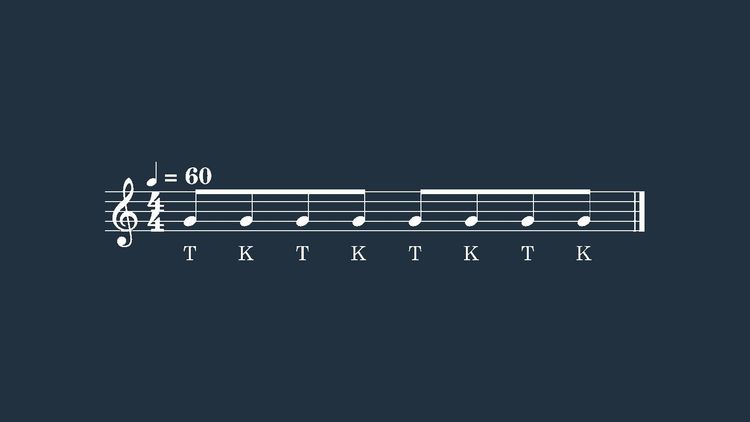
First Flute Double Tonguing: Alternate Two Articulations on One Note
Learn to alternate T (front of tongue) and K (back of tongue) attacks on a single G4 note. This guide covers what T and K actually are, how a teacher models the K attack, and how to build from one pair to a full bar of eight even onsets — w

Beginning Violin Vibrato: Return to a Secure Stopped Pitch
Introduces vibrato to early-intermediate violinists by distinguishing left-hand pitch undulation from a trill, a slide, and bow-pressure pulsing. Covers establishing a clear reference note (C♯5), watching the teacher's demonstration, attemp

Violin Tone Color: Move the Bow's Contact Point
The bow can cross the open D string in three named positions: ordinario in the middle, sul tasto near the fingerboard, and sul ponticello near the bridge. Each produces a different tone color at the same pitch and rhythm. This guide explain

Accordion: Keep the Melody Held While Bass Buttons Release
Learn to hold a two-beat treble note while releasing short C bass and C-major button events on a piano accordion with Stradella bass. Original notation, control diagrams, and two companion worksheets separate shared attacks from independent

Singing Diction: Sustain the Vowel, Finish the Word Together
Keep a short sung word clear without turning its final consonant into most of the note. This beginner lesson uses moon and soon to connect spoken sound roles, a sustained vowel and a teacher’s ending cue. Original notation, timing diagrams

Snare Cross-Stick: Change the Contact, Keep the Beat
Learn what stays on the head and what strikes the rim in an acoustic cross-stick, how it differs from a head stroke and an open rimshot, and how to read a local contact legend. Original examples preserve the beat while changing the requeste

Violin Bow Retakes: A Silent Return for the Next Down-Bow
Prepare another violin down-bow during a counted rest without adding an unwanted note. Follow open-D examples, compare an airborne retake with an on-string reversal, and learn how starting and ending locations determine the return. Practice
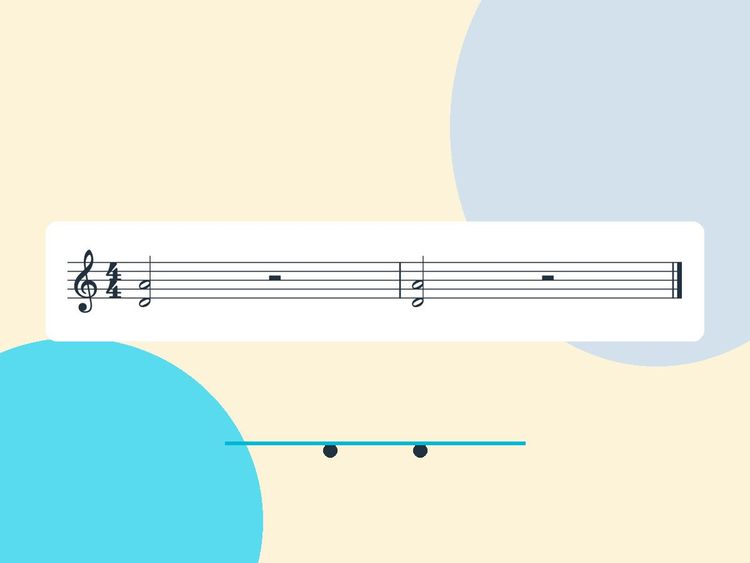
Violin: Play Two Open Strings Together with One Bow
Learn to read two vertically aligned notes, locate neighboring open strings, and listen for both pitches throughout a comfortable bow stroke. Original examples compare D–A, G–D, and A–E pairs with successive notes. Use teacher-guided contac

Guitar Bends: Match Half-Step and Whole-Step Target Pitches
Start with G on the B string and hear exactly where a half-step or whole-step bend should land. Compare each destination with an ordinary fretted reference, distinguish pitch rise from sideways travel, and plan an audible return or a silent

Flute G4 and G5: Same Keys, Two Registers
G4 and G5 on the flute use an identical fingering. This lesson explains how to hear the difference between the two registers, understand why the same key state produces two pitches, separate register control from volume, and practice with i

Oboe D5 to E5: How to Hand Off from the Half-Hole to the Thumb Octave Key
How to coordinate the left-index half-hole and the thumb octave key when moving between D5 and E5 on the oboe. Covers the mechanical difference between the key cup and the vent opening, the individual states of each note, a coordinated hand

How to Switch Between Pizzicato and Arco on Violin
Violin scores switch between two right-hand actions — pizzicato (plucking) and arco (bowing) — using the marks pizz. and arco. Both are persistent: the mode stays active across every barline until the other mark cancels it. This article exp

Guitar Hammer-Ons and Pull-Offs: One Pluck, Two Notes
How to read and perform an ascending or descending guitar slur — one plucking attack that sounds two notes via the fretting hand. Covers the hammer-on, the pull-off, the role of finger preparation, even quarter durations, and how to practic

Guitar Capo: Chord Shape vs. Sounding Chord
What a capo actually does to every string, why the chord shape name and the sounding chord name differ, how to calculate the sounding chord from any shape and capo position, and how to find the right capo for a target key. With engraved not

Accordion Bellows Changes: Reverse During the Rest, Keep the Phrase
Teach beginners to plan when to reverse the bellows on a piano accordion — by releasing keys on a printed rest, changing direction silently, and restarting cleanly on the next beat. Original notation examples, a beat-by-beat timeline diagra

Your First Partial Guitar Barre: One Finger, Three Strings
How to place one finger flat across strings 1, 2, and 3 of a guitar and check each string separately for a clear, sustained tone. Covers the audit process (pluck and listen), frets 5 and 7 as practice targets (Am and Bm shapes), releasing p

Two-Mallet Marimba Rolls: How to Keep a Long Note Alive
A marimba bar fades the moment you strike it. This guide teaches early-intermediate two-mallet players how to read roll notation, alternate right and left mallets through the written duration, start and stop on the exact written beats, and

Trombone Legato Tonguing: Connect Slide Notes Without a Smear
Bb2, A2 and Ab2 sit on the same partial — so a plain slide slur gives you a glissando, not two clean notes. This guide explains why same-partial neighbors need a light legato tongue on the second note, how to coordinate it with the slide on

Place Before You Pluck: Your First Two-Finger Harp Move
A beginner harp lesson on the first real technique: placing both fingers on the strings before you play. Learn which finger takes which string, why you prepare in advance, how to pluck the lower-then-upper pair, and how to use the rest to r

The Multiple-Bounce Roll: How Many Bounces and How Long to Keep Them Going
What the snare multiple-bounce (buzz) roll is, why three slashes on the stem do not mean three exact hits, how to read roll duration from a half note or whole note, and how to start and stop cleanly on the beat. With engraved notation examp

Snare Drum Flams: One Quiet Grace, One Loud Beat
Learn what a snare drum flam is, how to read the grace-note symbol, and how to keep the primary stroke exactly on the beat. Step-by-step exercises cover the opposite-hand rule, changing the leading hand, and diagnosing the three most common

Pedal Harp: How One Pedal Changes a Letter Across Octaves
Learn to separate a harp string’s letter, its pedal state, and its sounding pitch. Read flat, natural, and sharp settings, follow an original four-bar comparison, and spot conflicting demands on two F strings. Clear middle-register examples

C Harmonica Holes 4–6: Read Blow and Draw
Learn the six sounding pitches in holes 4, 5 and 6 of a standard C Richter diatonic harmonica. Read each hole number with its breath direction, compare same-hole pitch changes, and plan an original four-bar melody with counted rests. A prin
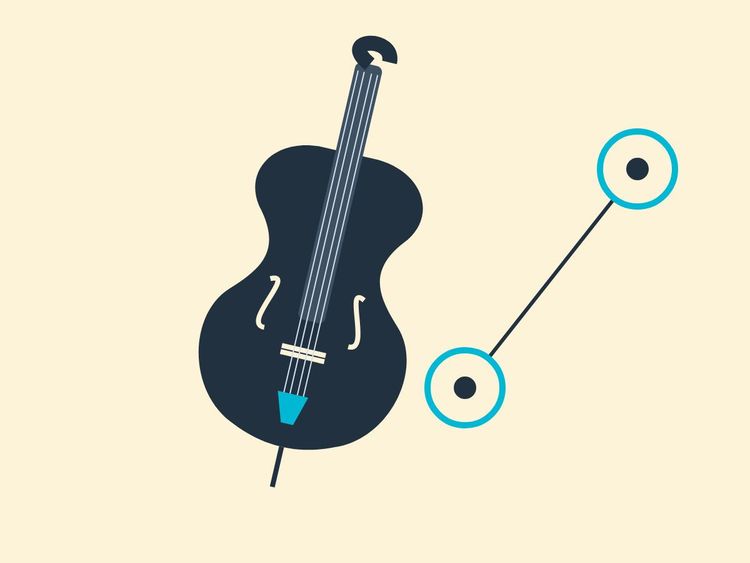
Cello Shifting: First to Fourth Position with Finger 1
Practice E3 to A3 on the cello’s D string with the same first finger. Learn why shifting is useful, which way the hand travels, and how finger numbers differ from position labels. Annotated examples show counted rests for the ascent and ret

Timpani Muffling: Let the Note Ring, Then Release on Time
Learn to separate a timpani attack from its planned ending on one pre-tuned drum. Count complete quarter, half and dotted-half notes, place a teacher-demonstrated muffle at the following rest, and keep counting through silence. Original rea
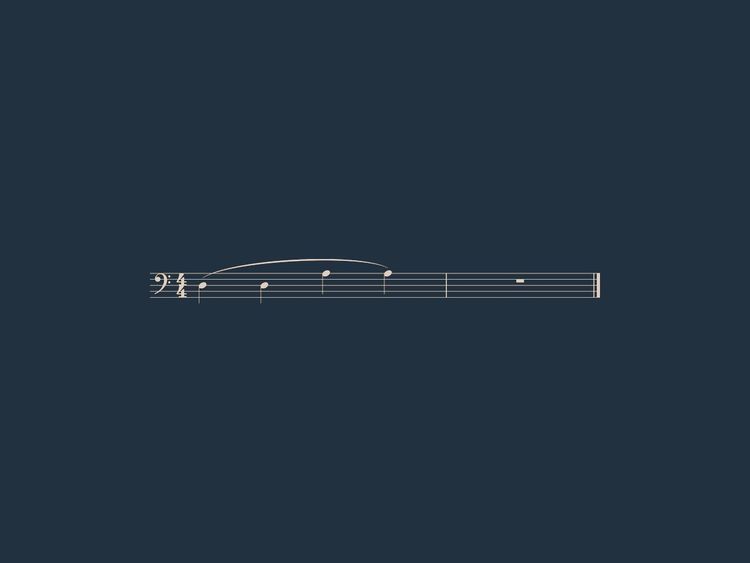
Cello String Crossings: Play D and A in One Bow
How an early cellist can cross from open D3 to A3 — or back — inside a single slurred bow, without an accent or a break. Covers what a crossing is, why D and A are adjacent, where the level change happens inside a four-note bow, and how to
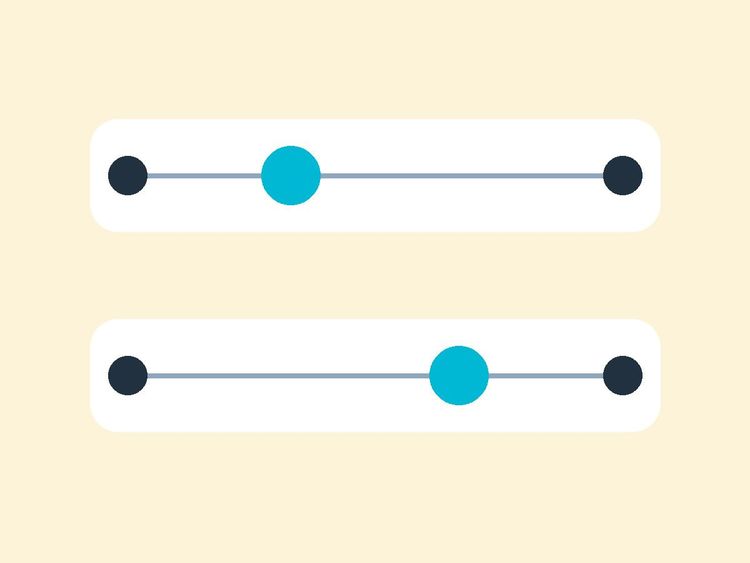
Viola Second Finger on D: Low F, High F-sharp
Learn to choose F natural or F-sharp with the same second finger on the viola’s D string in first position. Compare original alto-clef examples, find the half step beside finger 1 or finger 3, and follow sharp-to-natural changes within a me

Classical Guitar Right Hand: Keep i–m Alternation Across Barlines and Rests
A single rule — one pluck, one turn — makes i–m alternation predictable across barlines, rests, and string changes. This lesson walks through two worked cells, a repair exercise with deliberate errors, and a four-bar reading study. All exam

Double Bass Half Position: Find Notes with Fingers 1, 2 and 4
Learn a teacher-confirmed 1–2–4 half-position map on the double bass’s A and D strings. Match B-flat, B and C or E-flat, E and F to the supplied fingers, distinguish written notes from their sounding octave, and read short original pizzicat

Saxophone B-flat: Compare Bis and Side in Two Short Patterns
Learn two key combinations for the same written B-flat on alto or baritone saxophone. Compare bis in A–B-flat–C with side in B–B-flat–B, read the natural signs, and mark a route before playing. Original short studies, clear control diagrams
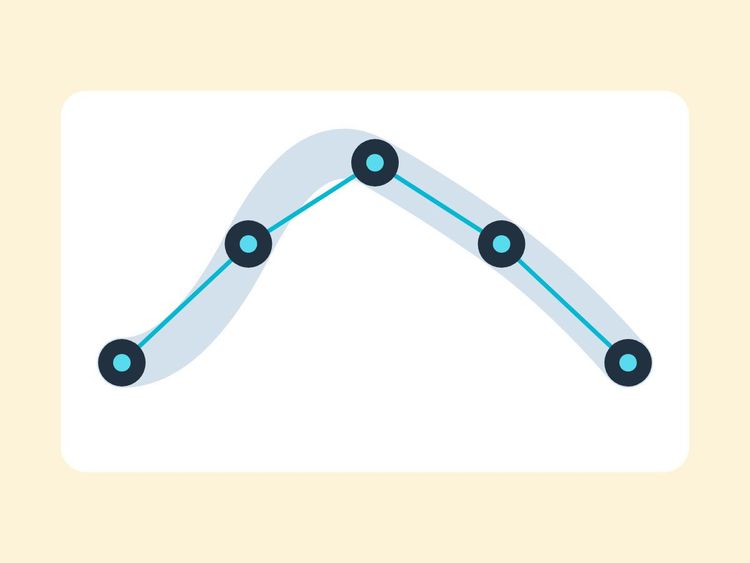
Gentle Singing Warmup: Hum, Rest, and Keep Your Starting Pitch
Learn a small hum-to-vowel pattern with a starting pitch, octave, sound, and dynamic chosen in your lesson. Follow the rise and return, count the half rest and full silent bar, compare optional pitch references without climbing automaticall

Violin Natural Harmonics: Find the Midpoint, Hear the Octave
Learn to predict and compare the D- and A-string midpoint harmonics with their open-string references. Separate light touch from normal stopping, read a clearly declared diamond-note convention, and use original notation, string diagrams an

Tenor Recorder: G4–G5 and the Thumb Vent
Learn to read sounding G4 and G5 on a Baroque-system tenor recorder while keeping front holes 1–3 closed and 4–7 open. Compare closed and vented thumb symbols, separate chart reading from the sounding response, and use original half-note ro

Two-Mallet Marimba: Find F♯ Before You Strike
Learn to connect treble-clef pitches with the two rows of a marimba, distinguish F4 from F♯4, and prepare the next bar before playing. Trace an original two-mallet route, count rests, join two short phrases, and separate a wrong pitch from

Trombone Slide Positions: One Register, Down and Back
Follow B♭2 down to E2 and back in concert bass clef, pairing each second-partial pitch with its primary slide position. Read original short routes, count rests before sixth-position entries, and learn why numbered position cards cannot meas

High-G Ukulele: String Order, Pitch Order, and Your First Melody
Learn why the fourth string can sound higher than the third, sort the four open pitches, and locate G4 in two places. Follow an original eight-note melody with an explicit string-and-fret route, then check octave, location, and timing separ

Accordion Stradella Bass: Find the Note and Chord Buttons
Tell a single bass note from a preset major or minor chord on the accordion’s left-hand side. Use an oriented F–C–G button map, compare C major with C minor, and read a four-bar bass–chord pattern in 2/4. Clear examples explain the note nam

Flute Articulation: Where to Tongue and Where to Connect
Read a printed flute line as a map of tongue starts and connected pitch changes. Using familiar G4, A4, and B4 notes, compare separate and slurred versions, preserve every rest, and follow mixed two- and three-note groups. Original examples
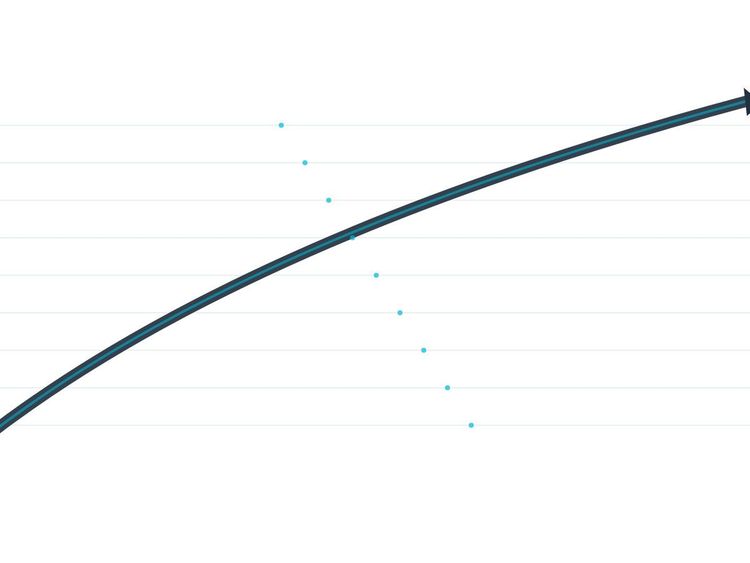
Violin Bow Distribution: How to Plan Enough Bow for the Long Note
Bow distribution is a planning step, not a mystery. This guide shows beginning violinists how to treat the usable bow region as a 0–1 number line, use a constant-speed practice model of ¼ per quarter-note beat, predict the endpoint of every

Snare Drum Sticking: Keep Time Through Your First Paradiddle
Keep eight even strokes while changing the hands that play them. Read alternating singles, controlled doubles and RLRR LRLL on a practice pad, count through pattern changes, and add only the printed accents. Original examples and two printa

Bass Clarinet: Two Routes Across the First Register Break
Separate the E3–B4 register-key twelfth from the neighboring A4–B4 crossing on B♭ bass clarinet. Read original treble-clef examples, add a counted preparation rest, then compare tongued and slurred connections. Use a clear written-pitch map

Timpani for Beginners: A Two-Drum Pitch and Retuning Plan
Choose drums for F2 and C3, prepare a later D3, and find a full-bar rest for the change. This beginner lesson separates supplied classroom ranges from real instrument specifications, and a tuning indicator from a sounding-pitch check. Inclu

Harpsichord Stops: Hear What 8′ and 4′ Change
Learn to predict the sounding octave when a harpsichord uses an 8′ choir, a 4′ choir, or both. Separate the keys you play from the pitches you hear, distinguish two unison choirs from octave doubling, and write a registration plan around a

Your First Trumpet Lip Slurs: Two Notes, Same Valves
Connect written C4 and G4 on a B♭ trumpet while keeping all three valves open. Learn to read the slur, compare a teacher’s tongued and connected models, count the printed rests, and describe what you heard. Original notation and a printable

Piano Chords for Small Hands: Share the Notes Between Your Hands
A chord too wide for one hand does not have to lose a note. Learn to mark bass, top note and inner notes, give one inner note to the other hand, check that every sound survives, and tell sharing apart from rolling and from leaving a note ou

Piano Leaps: Find the Landing Before You Play
Missing a bass note can begin with an uncertain destination. Learn to name the exact key, move there silently, and add sound after you arrive. Original left-hand studies separate travel from stretching, build the return trip, and connect la

Your First Piano Duet: Count In, Cue and Finish Together
Share a keyboard with a partner and learn an original eight-bar duet, one hand each. Find separate playing spaces, give a steady count-in, count through rests, prepare entrances and release the last notes together. A complete score, individ
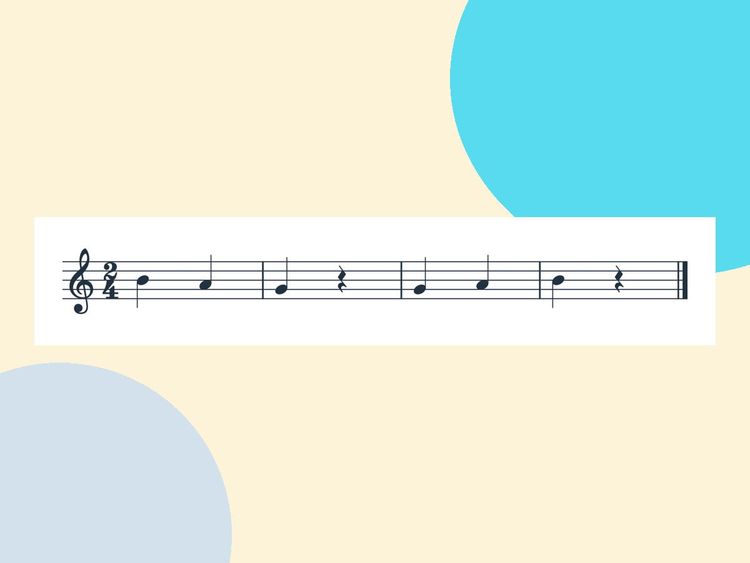
Your First Oboe Lesson: A Teacher-Led Start with B, A and G
Prepare for a live oboe lesson with a practical packing list, clear questions for your teacher and three notes to recognize on the staff. Read B4, A4 and G4, count quarter notes and rests in 2/4, and follow an original four-bar tune. Printa

Change Guitar Chords Without Stopping: Em, Am and C
Turn two hesitant open-chord changes into a steady four-bar accompaniment. Check every sounding string, map exactly which fingers move or stay, and prepare the next chord during a counted rest. Original practice examples, printable change m

Mirror Practice at the Piano: Symmetrical Inversion from Ganz to Hamelin
Learn why the keyboard mirrors around D and A♭, then reflect a five-finger pattern, a thumb-crossing scale, a broken chord and two bars of Bach into the other hand. Engraved examples keep the finger numbers unchanged. A short routine, print

How to Play Piano with Both Hands: A Step-by-Step Coordination Lesson
Put a short piano passage together by finding shared beats, keeping held notes sounding and choosing dependable fingers. Work from a C five-finger pattern to Burgmüller’s La Candeur and a simple Alberti accompaniment, with engraved examples

How to Play Rock: Where It Came From, How the Styles Differ, and the Backbeat, Power Chords and Riffs Behind the Sound
Rock grew from gospel, blues, rhythm and blues and country, and its styles, from 1950s shuffles to punk and alternative, each changed the beat, the tempo or the guitar sound. Learn the standard rock beat on drums, power chords and two movab

How to Play Piano with Expression: Dynamics, Articulation, Phrasing, Voicing and Tempo
Read the common expression marks and learn how to play each one: the six dynamic levels from pp to ff, hairpins, sf, fp and subito, legato, staccato, tenuto, accents and the two-note slur, phrases that rise and taper, a melody voiced over i

How to Use the Sustain Pedal on Piano: When to Press, When to Lift and How to Change It Cleanly
What the damper pedal does inside the piano, how to read Ped., the star, pedal lines with their notches, con pedale, senza pedale and sim., and how to make a legato change with no blur and no gap. With engraved examples, a beat-by-beat timi

Piano Scales and Arpeggios: The Fingering Rules for Every Key, Plus a 15-Minute Daily Routine
Every major and minor scale on our worksheets is built from the same two finger groups, 1-2-3 and 1-2-3-4. This guide explains the three rules behind them, where finger 4 lands, the black-key scales Chopin liked to start with, minor, chroma

How to Play the 12-Bar Blues on Piano: Chords, Left-Hand Grooves and Your First Solo
Twelve bars and the three chords C, F and G are all it takes to play real blues. Learn the bar-by-bar map in C, dominant 7th voicings that barely move, four left-hand grooves from shells to a walking boogie bass, how to swing your eighths,

Piano Posture 101: How to Sit at the Piano, Set Your Bench and Shape Your Hands
How high and how far to sit at the piano, and why: elbows level with the keys and a little in front of your body, the front half of the bench, a tall spine, level wrists, curved fingers with the thumb on its side, and feet ready for the ped

Choosing the Right Guitar for Beginners: Acoustic, Electric, or Classical?
How classical, steel-string acoustic and electric guitars differ in string tension, neck width and gear, how to find a child's size on two makers' charts, what a first guitar costs in October 2026 and the six checks to make before you buy.

What Size Violin Does My Child Need? A Parent's Sizing Guide
Find the right violin for your child, from 1/16 to full size, by measuring the left arm with a soft tape measure. This guide compares four shop size charts and shows where they disagree, explains palm and wrist measuring and the scroll test
Practice Tips

Jazz Standards for Beginners: What to Learn First and How
What a jazz standard is, where standards come from, and the three forms behind most of them: 32-bar AABA, ABAC and the 12-bar blues. Then a shortlist of eight verified tunes to start with, a five-step method for learning each one from melod

How to Transcribe Music by Ear: A Step-by-Step Method
Learn to transcribe a full song from a recording: choose a first piece, slow it down and loop it, find the key and tonic, write the rhythm first, then the bass line, the melody by scale degree and the chords. Includes a worked four-bar exam

How to Prepare for a Music Exam or Audition: A 12-Week Plan
A backward-planned 12-week schedule for graded piano exams (ABRSM, Royal Conservatory, Trinity) and school auditions: what each exam actually contains, a weekly rhythm, scales and pieces, a 30-second sight-reading routine, aural practice wi

How to Help Your Child Practice Music at Home (Without Nagging)
A practical guide for parents with no musical background: where and when to practice, session lengths by age as starting points rather than rules, a three-part session of warm-up, assigned task and fun piece, how to use the teacher's notes,

Stage Fright: How Musicians Can Manage Performance Nerves
Performance nerves are common, and most of what helps happens before the day. Learn what music performance anxiety is and when to ask a professional for help, a two-week plan with memory checkpoints and mock performances, a calm routine for

How to Learn Piano as an Adult: A Realistic Roadmap for Your First Year
Is it too late to learn piano? Here is an honest first-year plan for adult beginners: what to expect, how to choose a first instrument, a month-by-month roadmap from five-finger positions to your first complete piece, a 25-minute daily prac

How Long Does It Take to Learn an Instrument? Realistic Timelines by Goal
Learning an instrument takes different amounts of time depending on what you mean by learn: playing a simple song, accompanying singing, joining a group or passing a grade exam. This guide gives published ABRSM hours, turns them into weeks

Free Printable Music Worksheets: How to Use Them to Learn (and Teach) Music
Free printable music worksheets work best when you know what each kind trains: reading, rhythm, theory, ear and technique. Learn how to pick the right level, work a sheet in three passes, check your own answers, sort mistakes into the next

How to Practice Piano Online With a Virtual Piano (and When You Need a Real Keyboard)
A browser piano can teach you where the notes are, what they are called, how intervals and chords look and sound, and how to check a melody. This guide gives three 10-to-15-minute routines for a virtual piano, explains what Tissimo's free o

How to Practice With a Metronome: A Complete Guide
The metronome is not a crutch — it is the most honest teacher in the room. This guide covers how a metronome works, the Italian tempo markings and their BPM ranges, time-signature settings, subdivisions, the tempo-ramp technique, backbeat c

How to Memorize Music: A Practical Guide
Most memory slips happen because muscle memory carries the whole load alone. This guide explains the four types of musical memory — kinesthetic, aural, visual, and analytical — and gives you a step-by-step plan: how to chunk a piece, build

How to Build an Effective Practice Routine
Learn how to structure a music practice session so every minute counts. Covers spaced practice vs. cramming, session structure (warm-up, technique, new material, review, free play), deliberate-practice techniques, goal-setting, tracking pro

Your Child’s Music Progress: A Portfolio of Three Samples
Choose an early performance, a comparable current take, and one written or creative sample to make music learning easier to discuss. Learn to agree on an observable skill, record task conditions, separate evidence from judgment, and lead a

Your Child’s First Music Recital: A Plan to Rehearse Together
Help your child prepare for a first recital with a shared parent and teacher plan. Agree on arrival, music, setup, start and finish cues, and what to do if something goes wrong. Then rehearse the complete sequence at home, from waiting to r

Keep the Beat When the Metronome Goes Silent
Carry a steady quarter-note pulse through a planned silent bar, then listen for an early, aligned or late return. Start with four audible bars and one silent bar in 4/4, transfer the test from claps to an easy instrumental pattern, and use

How to Memorize a Piano Piece: Build Restart Points You Can Test
If you can only play a piece from bar 1, a cue map gives you more ways in. Split a short piano piece into chunks, give each start a sound, a note and a hand shape, test the starts with the score closed, shuffle them and check again tomorrow

AI Tools for Music Students in 2026: Practice Apps, Transcription, Chatbots and What a Teacher Still Does Better
What practice apps, transcription and stem tools, chatbots and song generators actually do for a music student, with prices checked on October 16, 2026. Includes our own Basic Pitch transcription test engraved note for note, what a 2025 stu

How to Play by Ear: Ear-Training Exercises for Notes, Intervals and Chords, and Six Steps to Work Out a Song
Playing by ear runs on relative pitch, not perfect pitch. Four short drills train it: match and compare notes, measure intervals with song hooks and scale numbers, hear chord colors and I–IV–V by the bass, and clap rhythms back. Then work o

How to Sight-Read Piano Music: What Good Readers Do Differently, and a 10-Minute Daily Routine
Sight-reading is a separate skill from practicing, and it can be trained. This guide sums up what research on eye movements and expertise says strong readers do: take in more notes with each look ahead, read shapes and patterns instead of s

12 Classical Piano Pieces to Learn in Order: From the Minuet in G to Für Elise and The Entertainer
A suggested learning path through twelve real classical piano pieces, from Petzold's minuet (long credited to Bach), the Musette and Burgmüller's studies through Satie, Schumann and two sonatinas to Für Elise, Chopin's E-minor prelude and J

The Best Digital Pianos for 2026: A Comprehensive Guide
Sixteen digital pianos on sale in October 2026, from the $449 Kawai ES60 to Yamaha's AvantGrand N1X hybrid, grouped by budget, with prices checked at Guitar Center and Kraft Music and specs from the makers' pages (for Casio, two retailers'

How Learning Music Can Boost Your Productivity: 10 Practice Habits and the Research Behind Them
Ten practice habits from the music room, from practicing with a goal, chunking and slow-to-fast tempo ladders to short sessions, a log, recording yourself, routines and rehearsing under pressure, and how to try each one at work. See what th

9 Tips for Successful Online Music Lessons
Make an online music lesson sound like music: a quiet, front-lit room, camera angles for piano, guitar, violin and voice, the music settings in Zoom, Teams, Google Meet, FaceTime and the Tissimo classroom (checked in October 2026), wired he

How to Find a Free or Cheap Piano (and Know If It's Worth It)
Most free pianos are free for a reason. Learn where free and cheap pianos turn up in 2026, what moving, tuning and a pitch raise really cost in the US, how to date a piano from its serial number, what technicians check inside the case, and
Music History

The Classical Period in Music Explained: Haydn, Mozart and Beethoven
A player's guide to the Classical period, about 1750 to 1820: why the dates are fuzzy, how the galant style turned away from Baroque counterpoint, what Classical music looks like on the page (four-bar phrases, the Alberti bass, clear cadenc

Indian Classical Music Basics: Raga and Tala Explained for Western Listeners
A clear, respectful introduction to Hindustani and Carnatic music for Western learners: what a raga is (scale, ascent and descent, characteristic phrases, mood and time of day), the sargam syllables Sa Re Ga Ma, the tanpura drone, the 16-be

What Is Folk Music? Traditions, Oral Transmission and the Folk Revival
What folk music is and is not: the oral-tradition definition, why every song lives in variants, the collectors who saved the songs (Child, Cecil Sharp, the Lomaxes), the mid-century revival of Woody Guthrie and Pete Seeger, the sounds of mo

What Is Soul Music? History, Sound and How to Play It
Learn what soul music is: how gospel and rhythm and blues produced Ray Charles and Sam Cooke, how Motown, Memphis's Stax and Southern soul differ, and what makes the sound: backbeat, call and response, horn sections and I–IV and ii–V chords

The History of the Blues: From the Delta to Chicago
Follow the blues from work songs, field hollers and spirituals to W. C. Handy's published blues, Ma Rainey and Bessie Smith, Charley Patton and Robert Johnson in the Delta, and the electric Chicago sound of Muddy Waters and Howlin' Wolf. In

A Short History of the Guitar: From the Vihuela to the Electric
How the guitar became the instrument you know: the Renaissance vihuela and four-course guitar, the strummed five-course Baroque guitar, Torres and the modern classical guitar, Martin's X-bracing and steel strings, the jazz archtop, and the

A Short History of the Violin Family: From Amati to Jazz
Follow the violin family from its early 16th-century beginnings in northern Italy through the Cremona workshops of Amati, Stradivari and Guarneri. Compare Baroque and modern setups (gut strings, neck angle, the Tourte bow), see where the vi

A Short History of the Piano: From Cristofori to the Digital Piano
How did a Florentine instrument maker's soft-and-loud harpsichord become the piano you can buy today? Follow Cristofori's hammer action around 1700, the fortepianos of Haydn and Mozart, the iron frames and bigger keyboards of the 1800s, upr

Minimalism in Music Explained: Repetition, Process and Phasing
What minimalist music is and where it came from: La Monte Young's long tones, Terry Riley's In C (1964), Steve Reich's phasing and Philip Glass's additive process. Learn the techniques, how to listen to a piece that changes slowly, and try

How Film Music Works: Themes, Leitmotifs and Underscore
How film music works, explained with original examples: music the characters hear versus music only the audience hears, the leitmotif from Wagner's Ring to the movies, one motif transformed four ways, mickey-mousing versus underscore, orche

Opera for Beginners: How It Works and What to Hear First
A plain-English introduction to opera: the building blocks (recitative, aria, ensemble, chorus), the voice types, a short history from Monteverdi to Puccini, how to prepare for your first performance with surtitles and a synopsis, when to c

The Romantic Era in Music: A Listener's and Player's Guide (c. 1820–1900)
What the Romantic era in music is, why its dates are conventions, and what changed in the sound: expressive harmony, bigger pianos and orchestras, character pieces, program music, national color and the virtuoso. Meet eight composers, learn

What Is a Concerto? Soloist, Orchestra and the Cadenza
A concerto sets a soloist against an orchestra. Follow it from Corelli's concerto grosso and Vivaldi's ritornello, through Bach and Mozart's double exposition, to the Romantic virtuoso concerto, with four original notated examples, a timeli

Salsa and the Clave Explained: Latin Rhythm for Beginners
Learn the five strokes behind salsa. This guide places the son clave 3-2 and 2-3 beat by beat, shows how rumba clave moves one stroke, and demonstrates how a piano montuno, a bass tumbao and a conga tumbao lock to it, with original notated

Heavy Metal for Guitarists: Riffs, Palm Muting and Power Chords
A guitarist's primer on heavy metal: a short history from Black Sabbath to thrash, then the toolkit itself. Learn power chords, palm muting, the gallop rhythm, tremolo picking, drop D and the tritone through original riffs in tab and notati

What Is a Symphony? Movements, the Orchestra and How to Listen
A symphony is a long orchestral piece built from movements. This guide explains where the form came from, why Haydn is called its father, the classic four-movement plan with sonata form, minuet or scherzo and finale, the orchestra's four fa

Baroque Music Explained: A Listener’s and Player’s Guide (1600–1750)
What makes music Baroque, and how do you play it today? This guide places the era in context (1600 to 1750 is a convention, not a border), explains basso continuo and figured bass, terraced dynamics, ornaments, sequence, fugue, dance suites

Reggae Explained: The One Drop, the Skank and the Bass
A genre primer for guitar, keys, bass and drum players: how ska and rocksteady led to reggae in late-1960s Jamaica, how the skank chops on the off-beat, how the one drop leaves beat one empty, what rockers and steppers add, how the bass sin

What Is Gospel Music? History, Harmony and How to Start Playing It
A primer on gospel music for pianists, organists and singers: the road from spirituals and Thomas A. Dorsey to the Golden Age quartets, Mahalia Jackson and contemporary gospel, then the sounds to play: call and response, the 12/8 feel, the

Bossa Nova Explained: The Rhythm, the Chords and Where It Came From
A practical primer on bossa nova for guitarists, pianists and singers: how the style grew out of samba in late-1950s Rio around João Gilberto, Antônio Carlos Jobim and Vinícius de Moraes, a simplified practice batida, the seventh chords, ni

What Is Funk? The Groove, the Sixteenths and "the One"
A primer on funk for players of any instrument: where it came from (James Brown, the Meters, Sly and the Family Stone, Parliament-Funkadelic), how "the one" and sixteenth-note subdivision work, and original notated drum, bass, guitar, keybo

A Brief History of Music Notation: From Neumes to the Modern Staff
How Western music notation evolved from ancient oral traditions and cuneiform tablets through medieval neumes, Guido of Arezzo's invention of the staff and solmization syllables, Franco of Cologne's mensural rhythm system, Petrucci's 1501 p

The Eras of Classical Music: A Beginner's Listening Guide
A clear, era-by-era overview of Western classical music from Medieval plainchant to 20th-century modernism. Covers the defining textures, forms, and composers of each period — Medieval, Renaissance, Baroque, Classical, Romantic, and Modern

What Is Jazz? A History, a Guide to the Main Styles, and How to Start Playing
Jazz is built on swing feel, improvisation, 7th chords and blues roots — four ingredients you can hear and play from day one. This guide traces the music from New Orleans and Dixieland through bebop, cool, modal jazz and fusion to today, th

What Is R&B? From Rhythm and Blues to Today, With the Chords, Grooves and Vocal Style to Play and Sing It
How "rhythm and blues" became R&B: Billboard's chart names from the 1942 Harlem Hit Parade to today's two R&B charts, jump blues, gospel and soul, funk on the one and hip-hop soul. Then play and sing the style yourself with original engrave

How Pop Music Changed, Decade by Decade: Beats, Chords and Machines from the 1950s to Today
From the shuffle of the 1950s to the streaming hits of the 2020s: how pop's beat moved from threes to twos to sixteenths, why its chords grew simpler, and which machines (tape, the Moog, the TR-808, MIDI, Auto-Tune, downloads and streams) a
General
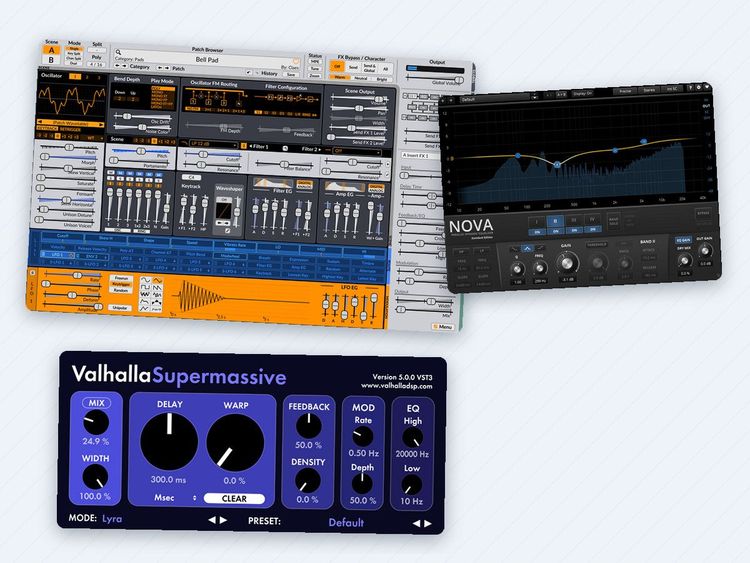
VST Plugins Explained: Formats, Installing Plugins and Using Them in Your DAW
What a plugin is, what VST, VST3, AU, AAX and CLAP mean and which DAWs load them, how to install plugins and rescan them in Ableton Live 12, FL Studio and Logic Pro, and where they go in a mix. Real screenshots of TDR Nova, FabFilter Pro-Q
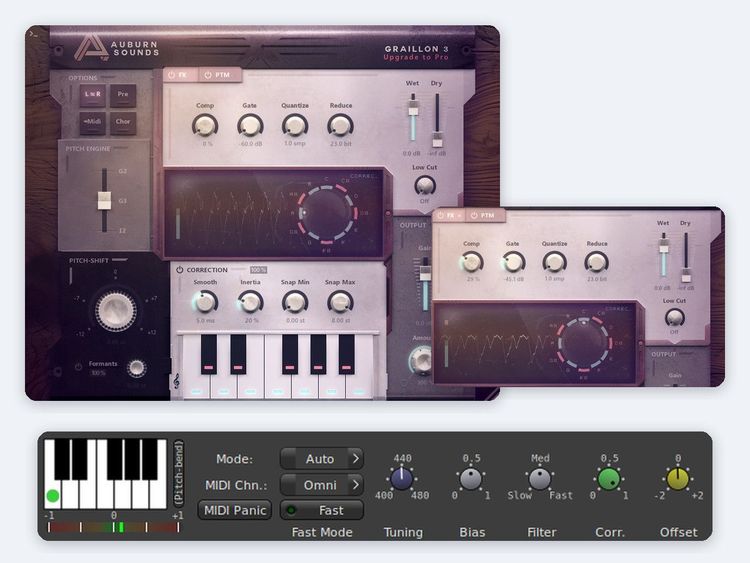
Free Pitch Correction Plugins Compared: Graillon, x42-autotune and the Tools in Ableton Live, FL Studio and Logic Pro
How automatic pitch correction works, why natural tuning and the robotic effect are the same controls set differently, and two free plugins compared with real screenshots and pros and cons: Graillon 3 Free Edition and x42-autotune. Includes

The Best Plugins for FL Studio: The Stock Plugins Worth Learning and the Free and Paid Plugins to Add
A job-by-job guide for FL Studio users: which of FL Studio's own plugins your edition already includes for EQ, compression, reverb, delay, limiting and synths, and which plugins are worth adding, from free tools like TDR Nova, Kotelnikov, V

Piano Plugins Compared: Pianoteq 9, sfizz with the Salamander Grand Piano, and Your DAW's Own Piano
A modeled piano against a free sampled one: Pianoteq 9 and sfizz with the Salamander Grand Piano, plus the pianos built into Ableton Live, FL Studio and Logic Pro. Real annotated screenshots, honest pros and cons, prices and trial limits, a
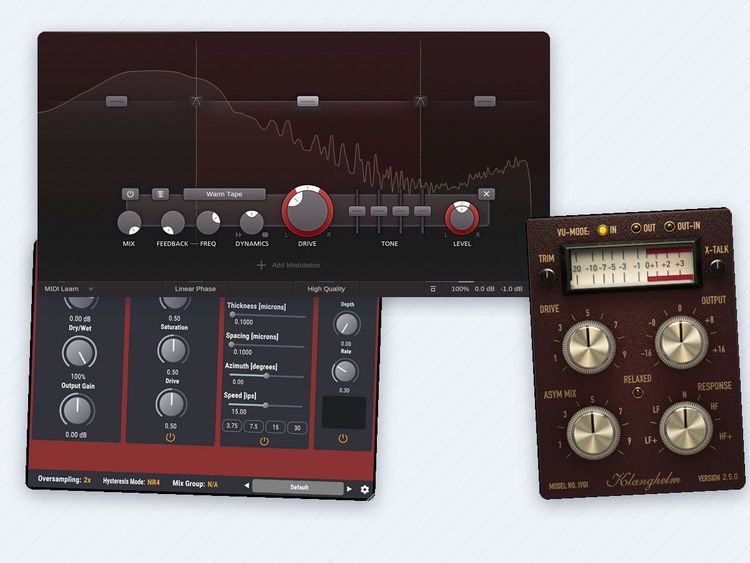
Saturation and Tape Plugins Compared: FabFilter Saturn 2, ChowTapeModel, Klanghelm IVGI and More
What saturation adds to a sound, shown with computed curves and harmonic spectra, then five plugins compared with real screenshots: FabFilter Saturn 2, ChowTapeModel, Klanghelm IVGI, Airwindows Consolidated and Surge XT Effects. Pros and co
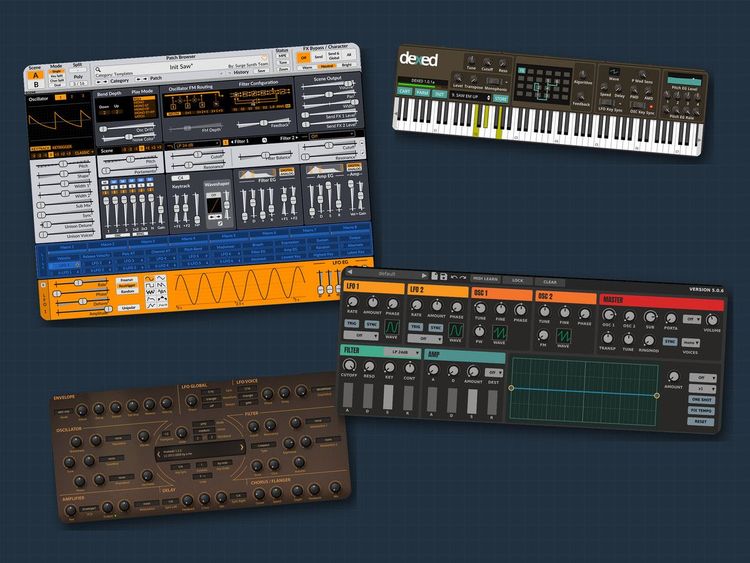
Free Synth Plugins Compared: Surge XT, Vital, Dexed, Odin 2, TAL-NoiseMaker and u-he's Free Synths
Eight free synth plugins side by side: Surge XT, Vital, Dexed, Odin 2, TAL-NoiseMaker and u-he's Tyrell N6, Podolski and Zebralette 3. See each one in real annotated screenshots, with honest pros and cons, notes for Ableton Live, FL Studio
Reverb Plugins Compared: Valhalla Supermassive, FabFilter Pro-R 2, Dragonfly Reverb and More
Five reverb plugins side by side on real screenshots: Valhalla Supermassive, FabFilter Pro-R 2, Dragonfly Reverb, TAL-Reverb-4 and u-he Protoverb. Pros and cons of each, prices and formats as of November 2026, five moves for any reverb on a

The Best Plugins for Ableton Live 12: What Live Already Does, and the Free and Paid Plugins Worth Adding
A job-by-job guide for Ableton Live 12 users: which devices your edition already includes for EQ, compression, saturation, reverb, delay, limiting, synths and piano, and which plugins are worth adding, from free tools like TDR Nova, Valhall
Delay Plugins Compared: FabFilter Timeless 3, Valhalla Freq Echo, ChowMatrix and More, Plus Five Delay Moves
Which delay plugin should you use? We compare FabFilter Timeless 3 with the free Valhalla Freq Echo, ChowMatrix, Surge XT Effects, Valhalla Supermassive and Airwindows TapeDelay2: features, formats and prices as of November 2026, with real
Compressor Plugins Compared: FabFilter Pro-C 3, TDR Kotelnikov, Klanghelm DC1A, Xfer OTT and More
Threshold, ratio, knee, attack and release explained with computed curves, then five compressors compared with real screenshots and honest pros and cons: FabFilter Pro-C 3, TDR Kotelnikov, Klanghelm DC1A, Xfer OTT and LSP Compressor Stereo.
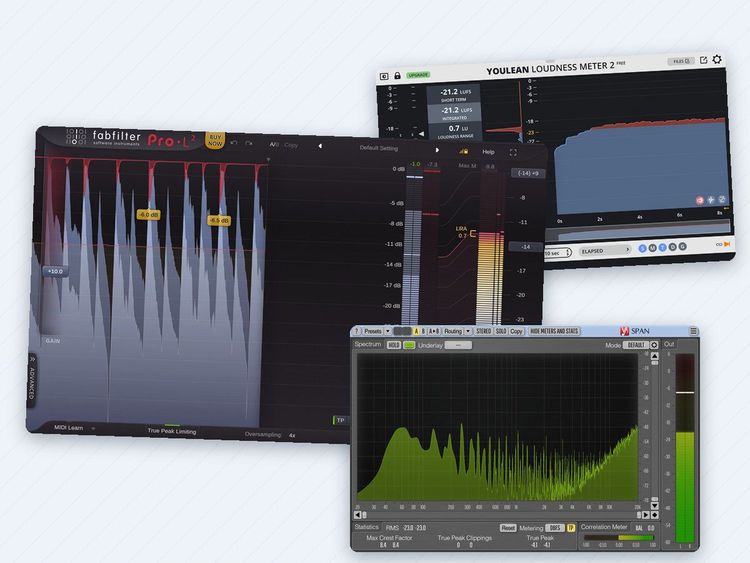
Limiter and Loudness Meter Plugins Compared: FabFilter Pro-L 2, Youlean and Free Tools, Plus Four Finishing Moves
Which limiter and loudness meter should you use to finish a track? We compare FabFilter Pro-L 2 with the open-source x42-dpl and LSP Limiter Stereo and the free Youlean Loudness Meter 2 and Voxengo SPAN, with real screenshots, prices and fo

The Best Plugins for Logic Pro: What Logic Already Has, and the Free and Paid Audio Units Worth Adding
A job-by-job guide for Logic Pro 13 users: what Logic's own EQ, Compressor, ChromaGlow, reverbs, Limiter, Loudness Meter, Alchemy and Studio Piano already do, and which Audio Units are worth adding, from free TDR Nova, Kotelnikov, DC1A, IVG
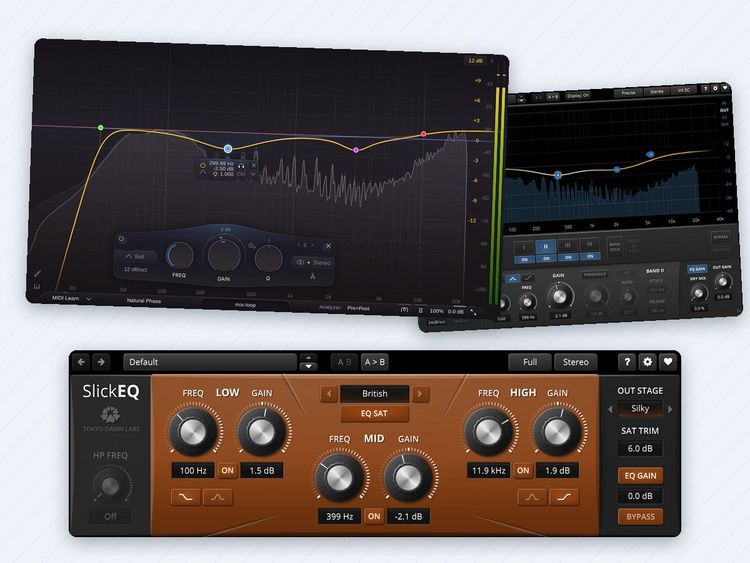
EQ Plugins Compared: FabFilter Pro-Q 4, TDR Nova, SlickEQ and Free EQs, Plus Five EQ Moves to Try
Which EQ plugin should you use? We compare FabFilter Pro-Q 4 with the free TDR Nova and TDR VOS SlickEQ and the open-source LSP Parametric Equalizer and x42-eq: bands, dynamic EQ, mid/side, linear phase, formats and prices as of November 20

Where to Find Free Sheet Music Legally: Public Domain Scores and How to Check Them
Free sheet music is everywhere online, but not all of it is free to print and share. Learn why a composition, an edition and a recording each have their own copyright, how long copyright lasts in the US and elsewhere, how to read IMSLP's co

How to Write a Chord Chart Your Band Can Read
A practical guide to writing a chord chart for a band: how a chart differs from a lead sheet, bars and repeat signs, first and second endings, section labels, D.S. al Coda, slash notation, chord symbols, hits and stops. Includes a complete

Guitar Amps Explained for Beginners: Types, Controls and Practice Setup
A plain-language guide to your first guitar amp: how tube, solid-state and modeling amps differ, combo versus head and cabinet, why wattage does not equal loudness, what gain, master volume, EQ and reverb do, how to practice quietly, and ho

Trumpet, Trombone or French Horn? Choosing a Brass Instrument
How to choose between trumpet, trombone and horn: how the lip buzz and harmonic series make every note, valves versus slide, clefs and transposition (B♭ trumpet, bass-clef trombone, horn in F), mouthpiece shape and comfort, styles, what the

Flute, Clarinet or Saxophone? Choosing a Woodwind Instrument
Compare the flute, clarinet and saxophone before you pick one: how an air jet and a single reed make sound, why the clarinet and saxophone read different notes from a piano part, what the first month asks of you, reeds and rental costs, sta

Violin, Viola, Cello or Double Bass? Choosing a String Instrument
Compare the four bowed string instruments before you pick one: open strings and clefs for each, the role each plays in orchestra, quartet, jazz and folk music, how big they are and how you sit or stand, fractional sizes and starting ages, r

How to Write Song Lyrics: A Beginner's Guide
A practical beginner's guide to writing song lyrics: how to find a small moment and a title that works as a hook, what verses and choruses do, perfect, slant and internal rhyme and the common rhyme schemes, how syllable stress fits a rhythm

How to Change Guitar Strings (and Keep Your Guitar Playing Well)
When to change guitar strings, how steel and nylon differ, and step-by-step restringing for acoustic (bridge pins), electric and classical (tie-block knot) guitars, with diagrams. Then stretching and tuning new strings, cleaning, humidity a

How to Teach Music Lessons Online: Setup, Sound and a Free Classroom
A practical guide for private music teachers moving lessons online. Learn where to put the camera for each instrument, how to light your face and hands, why video-call noise suppression hurts instruments and what music mode changes, why you

MIDI Explained: What It Is, How It Works, and Why It Matters for Every Musician
MIDI is not audio — it is a set of performance instructions: which note, how hard, and when. This guide explains the standard introduced in 1983, its 16 channels, 128 note numbers, velocity, Control Change messages, the piano roll, quantize

Changing Music Teachers: A Clear Handover for the Next Lesson
Prepare a one-page handover that identifies the exact music, records one current task, and gives the student a question to bring to the next teacher. Follow a fictional worked example, agree what may be shared, check instrument and material

How to Make a House Track in Ableton Live 12 from Scratch
Build a small house track using three Core Library sounds: a four-on-the-floor Drum Rack beat, a root-and-fifth bassline, and close chord stabs. Follow matching staff notation and MIDI examples, arrange six sections in eight-bar blocks, the

Fix Latency, Crackles and Bad Exports in Ableton Live 12
Trace delayed headphones, misplaced recordings, random crackles and distorted or quiet files through a practical Ableton Live 12 workflow. Build a simple pulse, choose a stable buffer and one monitoring route, understand compensation, leave

Sound Design in Ableton Live 12: Build a Bass, Lead and Pad with Wavetable and Drift
Build three dry synth patches and learn what each adjustment does to the sound. Follow fixed MIDI examples through oscillator choice, cutoff and resonance, separate amplitude and filter envelopes, modulation routing and restrained unison. C

Mixing in Ableton Live 12 with Stock Devices: A Small Worked Mix
Build a clear six-track mix with the devices already in Ableton Live. Follow the decisions behind source trim, fader balance, modest EQ cuts, compression, kick-triggered bass ducking and shared reverb and delay. A four-bar musical example,

Sampling in Ableton Live 12: Chop, Slice and Resample with Simpler
Turn a Core Library drum loop into a new groove with a complete eight-slice exercise. Compare Classic, One-Shot and Slice, line up a bar with the tempo, choose transient, beat or region boundaries, play the pieces with MIDI or Drum Rack, an

How to Start Producing Music at Home: The Gear You Need, Choosing a DAW and Six Steps from Idea to Finished Track
What to buy for a home studio and in which order, with dated example prices from $0 to about $410; how to pick a DAW such as GarageBand, Logic, FL Studio, Ableton Live, Bitwig or Reaper with two questions; and what happens at each stage of

How to Introduce Your Child to Music at Every Age: A Parent's Guide
From lullabies and lap bounces to a first instrument and a school choir: an age-by-age plan for children from birth to 12. What research supports and what it doesn't, nursery songs engraved from old public-domain songbooks, steady-beat and

Ableton vs Bitwig: The Complete DAW Comparison Guide for Music Producers
Live 12.4 and Bitwig Studio 6.1 compared as of October 2026: Session View against the Clip Launcher, modulators and The Grid against Max for Live, MIDI tools, note Operators and MPE, audio editing, Linux and plug-in support, editions and pr

What's New in Ableton Live 12.3 and 12.4: Essential Updates for Music Producers
A practical guide to Ableton Live 12.3 and what came after it, up to Live 12.4.6 (October 2026): Stem Separation in Suite, Splice in the browser, Bounce Groups, Paste Bounced Audio, Auto Pan-Tremolo, Device A/B, Link Audio and the Learn Vie

The Best First Instrument for Kids: A Parent's Guide to Musical Success
Piano, ukulele, recorder, violin, guitar, drums or voice? Compare seven first instruments for kids by starting age, hand size, noise and US prices checked in October 2026, see the same first tune on each one, then follow a decision path and

ACE Studio Review (October 2026): AI Vocal Synthesis for Producers Without a Singer
An October 2026 review of ACE Studio 2.1.8: how notes and lyrics become a sung vocal, what Artist and Artist Pro cost, what the Terms of Use let you release, and how it compares with Synthesizer V and VOCALOID. We take the public-domain hym

The Soundtrack of Wellness
What listening to music does to your body, straight from the studies: how tempo moves your breathing, heart rate and blood pressure, what the Cochrane review found for sleep, how music helps before and after surgery and during exercise, and

The Healing Power of Music: How It Lifts Your Mood and Eases Stress, Anxiety, and Depression
What the research really shows about music and mental health: dopamine and chills, choirs and social bonding, the meta-analyses on stress and anxiety, the Cochrane reviews on depression and dementia, and what board-certified music therapist

How Learning an Instrument Rewires Your Brain
What scans of musicians' brains show, what changes when children and retirees take up an instrument, and why the claim that lessons raise IQ is still disputed. With musical examples of the four jobs playing gives your brain (two hands, two

Online Music Lessons for Kids
A research-based guide for parents: the signs that a child is ready for online lessons, what studies of online lessons found, your role at ages 5 to 12, a sample 30-minute lesson for a seven-year-old, games that work through a screen, a pra

How to Choose the Right Music Teacher for You (or Your Child)
A practical vetting guide for students and parents: write a one-sentence goal, find candidates through directories, community music schools and online marketplaces, read degrees and MTNA certification, judge a trial lesson, ask the right qu

Is Ableton Live Good for Beginners? Your Complete Getting-Started Guide
Who Ableton Live 12 suits and who should pick GarageBand, Logic Pro, FL Studio, Bitwig or Reaper instead; what Intro, Standard and Suite cost in October 2026 and what the 30-day trial allows; how to set up an audio interface, MIDI keyboard

Stay in tune and subscribe to our newsletter
Sign up to have the latest music education information sent straight to your inbox!
By subscribing you agree to our Privacy Policy. Unsubscribe any time.